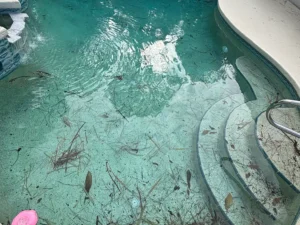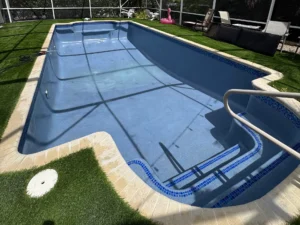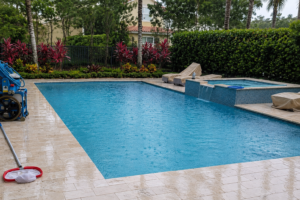
In South Florida, pool surfaces never fail overnight. Most homeowners first notice small signs- a few stains on the floor, rough spots on the steps, fading plaster in the corners, and tiny cracks on the wall. But these “small” surface issues are just symptoms of what may be a much larger problem underneath. Depending on what is happening beneath the surface, your pool may need replastering or full resurfacing.
At first, they sound like the same thing. But they solve very different problems.
Choosing the wrong repair can lead to unnecessary costs, shorter finish life, or deeper problems being missed underneath the surface. In South Florida, where pools deal with year-round heat, rain, and constant use, knowing what your pool actually needs is important.
In simple terms, pool replastering vs resurfacing comes down to the condition of the pool. Some pools only need a new finish. Others need structural repairs before a new surface can safely last.
This article breaks down the difference between the two, when each option makes sense, and how homeowners can make the right decision before problems become more expensive to fix.
What Is Pool Replastering?
Pool replastering is the process of removing and replacing the thin plaster finish layer inside a pool. It is mainly done to restore the pool’s appearance and smooth texture after years of normal wear.
Think of plaster as the protective skin of the pool. Over time, exposure to water chemistry, sunlight, and constant use slowly wears that surface down. In South Florida, this process often happens faster because pools stay active year-round.
Why Pool Surfaces Fail Faster in South Florida
South Florida pools face constant sun exposure, heavy rain, humidity, and year-round use. These conditions can accelerate wear and shorten the life of a pool finish.
For decades, this has remained the industry standard because it creates a smooth finish and the classic light-blue water appearance many homeowners prefer.
Replastering works best when the pool’s underlying structure is still solid, and the damage is mostly cosmetic. The process focuses on renewing the finish layer rather than repairing deeper structural problems.
What Is Pool Resurfacing?
Pool resurfacing is a broader term that refers to restoring or rebuilding the interior surface of a pool. Replastering can be part of resurfacing, but resurfacing often involves much more than simply applying a new plaster layer.
During resurfacing projects, the pool shell may require additional preparation and repairs before the final finish is applied.
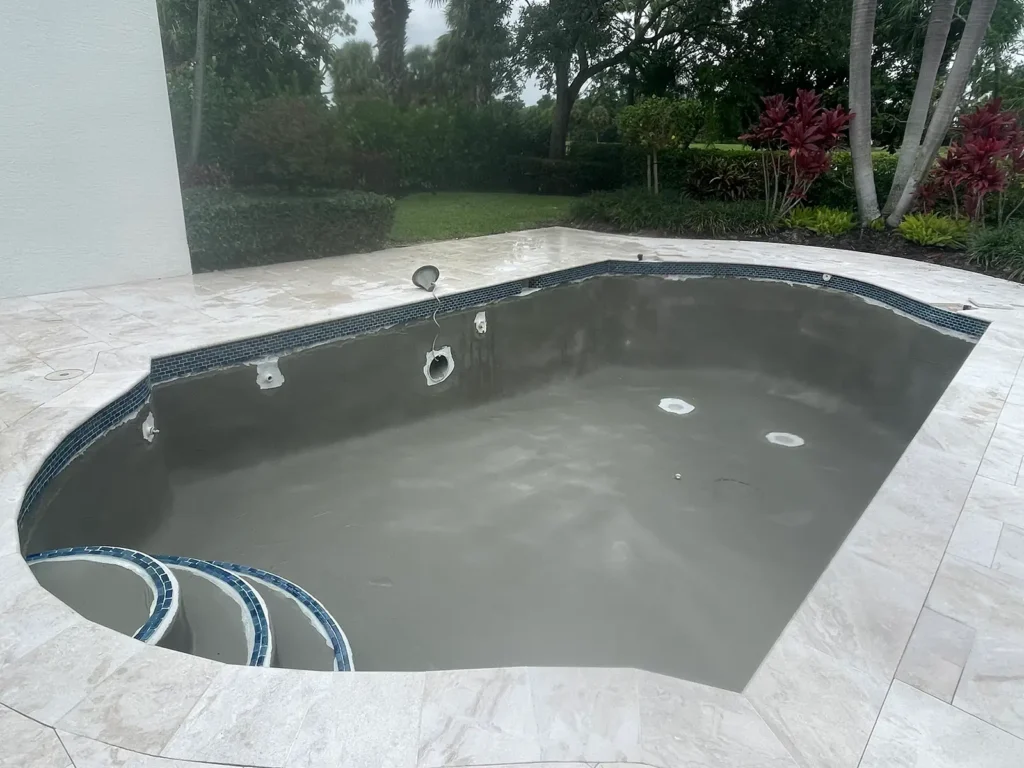
In many pools, surface wear is only part of the problem. Cracks, hollow spots, delamination, bond beam damage, water intrusion, or failing old plaster may also need to be corrected before a new finish can be applied safely.
That is where resurfacing becomes more comprehensive. A pool may receive a new plaster finish during resurfacing, but the project itself involves correcting the underlying conditions that caused the surface to fail in the first place.
Key Differences Between Replastering and Resurfacing
At first glance, replastering and resurfacing can sound like the same process. Both improve the look of a pool and involve applying a new finish. But the real difference in pool replastering vs resurfacing lies in how much work is being done underneath the surface. For homeowners comparing pool replastering vs resurfacing, understanding what is happening beneath the finish often matters more than the finish material itself.
| Factor | Pool Replastering | Pool Resurfacing |
|---|---|---|
| Material Type | Traditional white plaster | Quartz, pebble, or aggregate finishes |
| Surface Durability | Softer surface, more prone to etching | Harder, more chemical-resistant surface |
| Structural Repairs | Cosmetic only | May include crack and substrate repairs |
| Expected Lifespan | Often 7–10 years | Commonly 15–20 years |
| Long-Term Performance | Requires closer chemistry control | Better stain and wear resistance |
When Replastering is the Right Choice
Replastering is often the right choice when the pool structure is still in good condition, and the main issues are cosmetic surface wear. It is a practical solution for homeowners who want to restore a smooth, clean-looking finish without taking on a larger resurfacing project.
Homeowners often choose replastering when they notice:
- Rough or abrasive plaster
- Mild staining or discoloration
- Faded appearance
- Minor etching from water chemistry
- General surface aging
If you maintain strict control over your water chemistry, a standard replaster can provide a beautiful result for a decade. This option is also suitable for homeowners who plan to sell their property soon and want to refresh the pool’s appearance without a significant structural investment.
When Full Resurfacing Makes More Sense
Sometimes, surface wear is only part of the problem. A pool may look like it simply needs new plaster, but hidden structural issues underneath can cause a fresh finish to fail much sooner than expected.
Full resurfacing is usually the better option when a pool shows signs such as:
- Structural cracks
- Hollow spots beneath the surface
- Delamination or peeling of plaster
- Bond beam deterioration
- Water intrusion or recurring leaks
- Multiple previous plaster layers are failing
In these situations, applying new plaster alone may only cover the problem temporarily. The underlying surface must first be repaired and stabilized before a new finish can properly bond and last long term.
Cost Difference Between Replastering and Resurfacing
The cost difference between replastering and resurfacing reflects both the quality of the materials and the labor required to install them properly.
Upfront Cost
Replastering usually carries a lower upfront cost because traditional white plaster materials are more affordable, and experienced crews can apply them relatively efficiently.
Full resurfacing with quartz or pebble finishes requires a larger investment upfront. Aggregate materials are more expensive, and the installation process is more labor-intensive. Pebble finishes, for example, require specialized exposure and washing techniques after troweling to reveal the stone texture properly.
Maintenance Cost
Resurfacing can often last significantly longer than standard plaster, reducing how often the pool needs major surface work in the future. Stronger aggregate surfaces also resist staining, etching, and chemical wear more effectively, which can lower long-term maintenance demands over time.
A homeowner in Palm Beach County called us after replastering their pool twice within a year. At first, the finish looked great, but after several months they started noticing rough spots returning near the steps and the floor of the shallow-end. They complained the surface had become uncomfortable to walk on, and staining was beginning to reappear. After inspecting the pool, we found the issue was deeper than the finish itself. The underlying surface conditions were contributing to the repeated failure. In this case, instead of applying another plaster layer, we recommended resurfacing and upgrading to a pebble finish for a longer-lasting, lower-maintenance solution.
In simple terms, replastering usually lowers the initial project cost. Resurfacing often lowers the lifetime ownership cost.
More from Finn’s Pool Services’ Blog
West Palm Beach homeowners can find more details on local material options, project timelines, and other factors that affect pool resurfacing costs.The Importance of the Startup Process
This is the stage most homeowners underestimate, even though it has a major impact on how the finish eventually looks.
No matter which pool finish you choose, the first 30 days after installation are one of the most crucial. This is the curing phase, when the new surface gradually reaches its final hardness and durability. The National Plasterers Council (NPC) also states that startup procedures and water chemistry management play a major role in long-term plaster performance and appearance.
During this period, water chemistry must be carefully controlled. Improper chemical balance can cause permanent staining, scaling, streaking, or early surface deterioration before the finish has fully cured.
Daily brushing is also critical during startup because it removes plaster dust and helps the surface cure evenly.
At Finn’s Pool Services, startup care is treated as part of protecting the homeowner’s investment, not an afterthought. Proper chemical balancing and consistent brushing help ensure both replastering and aggregate resurfacing finishes achieve their expected lifespan and appearance.
How to Choose the Right Option for Your Pool
Selecting the “right” option depends on both your lifestyle and your maintenance routine.
- If you want the smoothest possible surface and are prepared to maintain careful water chemistry, replastering can be a very practical option. It delivers the classic look many homeowners prefer and works well when the pool structure is still in good condition.
- If you want a more durable, lower-maintenance solution with stronger resistance to staining, etching, and wear, an aggregate resurfacing project is often the better long-term choice. Quartz and pebble finishes are designed to hold up better under South Florida’s demanding pool conditions.
Before making a final decision, the pool shell itself should always be evaluated carefully. Structural cracks, hollow spots, or failing substrate areas must be addressed during the preparation phase, regardless of which finish is selected.
At Finn’s Pool Services, the goal is to match the finish to the condition of the pool and the homeowner’s long-term expectations, not recommend a one-size-fits-all solution.
If you’re unsure whether your pool needs replastering or full resurfacing, Finn’s Pool Services can evaluate the condition of your pool and recommend the right long-term solution before surface issues become more expensive to fix. Call now or use the form below.
Photo Credit: Hero Image by Eric Prouzet
- Phone: (561) 566-9344
- Email: [email protected]
-
Address: 1335 Old Okeechobee Rd. #450
West Palm Beach, FL 33401 - Mon – Fri: 8:00 AM – 6:00 PM
- Sat & Sun: 9:30 AM – 4:00 PM