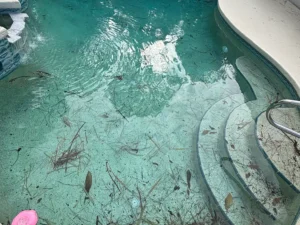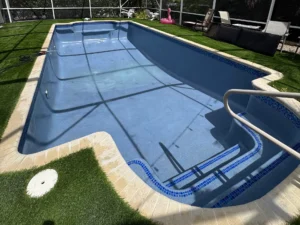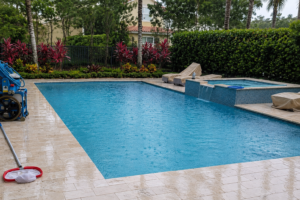
Cloudy pool water after rain is one of the most common problems South Florida pool owners deal with during storm season.
You finally got your pool water looking clean and balanced. It’s blue, it’s shimmering, and ready to be photographed. Then a Florida storm rolls through, and suddenly the pool is cloudy after the rain. The water suddenly looks dull, hazy, and poorly maintained. Ugh!
For many homeowners in West Palm Beach, this cycle becomes frustratingly frequent, especially during summer, when storms seem to show up every afternoon. It can feel like all the cleaning, brushing, and chemical balancing disappear overnight.
Storm runoff carries dirt, pollen, mulch, and other contaminants into the pool. At the same time, rainwater dilutes chlorine and throws off water chemistry, making it harder for the pool to stay clear. The good news is that this cloudy pool water is usually quite manageable, once you understand what is causing it.
This article explains what exactly causes your pool to go cloudy, and how homeowners can better protect their pools during Florida’s long rainy season.
Why Rain Affects Pool Water So Quickly
In South Florida, where storms are stronger and more frequent, changes to pool water chemistry after rain can happen within hours.
- Acidic Dilution: The natural pH of rainwater is around 5.6, which is slightly acidic. During heavy storms, rain lowers the pool’s pH while diluting chlorine.
- Storm Runoff: Florida downpours wash dirt, pollen, mulch, fertilizers, phosphates, and algae spores into the pool. Even clean-looking rainwater carries contaminants that affect water clarity.
- Warm Florida temperature: South Florida’s heat speeds up chemical reactions and algae activity, which is why pools here can turn cloudy much faster, after storms, than pools in cooler climates.
What Causes Cloudy Pool Water After Rain
Once heavy rain disrupts water chemistry, several different problems can cause cloudy pool water.
- Fine particles stay suspended: Dirt, pollen, dust, and organic debris become too small for the eye to see individually, creating a hazy appearance.
- Calcium separates from the water: Sudden chemistry shifts can cause dissolved calcium to precipitate, giving the water a milky appearance.
- Early algae formation: Even before algae turn the pool visibly green, microscopic growth can make the water appear dull or cloudy.
- Filtration cannot keep up immediately: After storms, filters may struggle to remove the sudden increase in fine contaminants quickly enough.
- Organic contamination reduces clarity: Runoff and debris increase water turbidity, especially after repeated days of heavy rain.
Cloudy water is usually not just “dirty water.” It is often a visible sign that the pool’s chemistry and filtration system are out of balance.
How Rain Impacts Pool Chemistry
The rain’s effect on the pool water is very visible. One reason cloudy water becomes difficult to clear after heavy rain is that several pool chemicals stop working as efficiently once the water balance shifts.
- Chlorine sanitizes less effectively: After storms, pH shifts, and contaminant buildup can reduce how efficiently free chlorine works, even if some chlorine is still present in the water.
- Combined chlorine can increase: As chlorine reacts with organic debris, sweat, and storm contaminants, chloramines begin forming. This can leave the water looking dull and reduce sanitizing performance, creating an unhealthy swimming environment.
- Water can become chemically aggressive: Low pH, diluted alkalinity, and reduced calcium hardness can create aggressive water conditions that slowly damage plaster surfaces and metal equipment over time.
- Fine particles stay suspended longer: Poor water balance can make tiny particles more difficult for the filtration system to remove efficiently, which contributes to cloudy water.
How to Fix Cloudy Pool Water After Rain
The fastest way to clear cloudy pool water after rain is to restore proper filtration and rebalance the water chemistry before algae or calcium issues develop. When pool water turns cloudy after heavy rain, many homeowners immediately add extra chlorine and hope the water clears on its own. Instead, follow these steps to treat the root cause of the problem.
Step 1: Basic Filtration
The first step is removing as much debris as possible. Leaves, dirt, pollen, and organic material continue consuming chlorine while they sit in the water, making it harder for the pool to recover.
Step 2: Test the Water
Next, test the water fully, not just chlorine levels. Heavy rain can lower pH, total alkalinity, calcium hardness, and free chlorine. If those levels stay unbalanced, the filtration system may struggle to clear the water efficiently.
One West Palm Beach homeowner dealt with this after several days of summer storms kept turning the pool cloudy after rain, even though the pump was running normally. Testing later showed the rain had diluted the chlorine and lowered the alkalinity enough that fine particles were staying suspended in the water instead of clearing properly.
Step 3: Clean and Run the Filter
Once chemistry is corrected, run the filtration system longer than usual and clean or backwash the filter if needed. After storms, filters often become overloaded with fine particles that keep the water looking dull or hazy.
Step 4: Brushing the walls, steps, and corners also helps loosen debris and early algae buildup before it settles deeper into the surface.
More from Finn’s Pool Services’ Blog
Read more about pool maintenance, and learn how weather affects pool maintenance during South Florida’s storm season in our detailed guides.
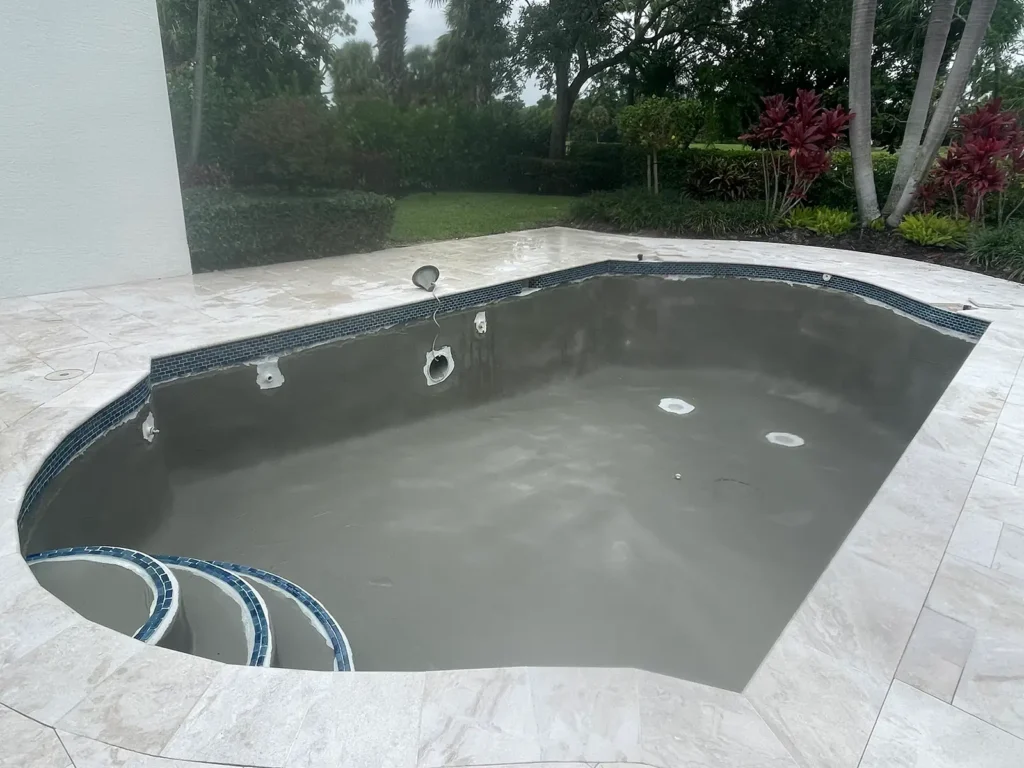
How to Prevent Cloudy Water During Storm Season
In South Florida, preventing cloudy pool water is usually much easier than correcting a major chemistry imbalance after repeated storms.
One of the biggest mistakes homeowners make is waiting until the water already looks cloudy before testing it. During Florida’s rainy season, pool chemistry can change quickly, even when the water still appears clear.
A few simple habits make a major difference:
- Test water more frequently during storm season
- Keep chlorine and alkalinity within the proper range
- Clean skimmer baskets before heavy rain
- Maintain strong water circulation
- Clean or inspect filters regularly
It also helps to prepare the pool before larger storms arrive. Removing debris early reduces how much organic material chlorine has to fight afterward.
For pools surrounded by landscaping, phosphate buildup can become another recurring issue during rainy months because storm runoff often carries fertilizers and organic waste into the water.
At Finn’s Pool Service, storm-season maintenance focuses heavily on monitoring chemistry stability before small imbalances turn into cloudy water, algae growth, or larger cleanup problems later in the season.
If cloudy pool water after rain keeps returning despite proper filtration and chemical balancing, the issue may involve circulation problems, hidden algae growth, or underlying water chemistry issues that require professional attention.
Finn’s Pool Services helps South Florida homeowners restore water clarity, correct chemistry imbalances, and prevent recurring storm-season pool problems.
Photo Credit: Hero Image by Eric Prouzet
- Phone: (561) 566-9344
- Email: [email protected]
-
Address: 1335 Old Okeechobee Rd. #450
West Palm Beach, FL 33401 - Mon – Fri: 8:00 AM – 6:00 PM
- Sat & Sun: 9:30 AM – 4:00 PM