Coming home from vacation should mean unpacking your bags and enjoying your pool, not discovering that the water turned green.
If your pool turned green after vacation, the most likely cause is that chlorine levels dropped while the pool sat unattended. Combined with South Florida’s summer heat, intense sunlight, and frequent afternoon storms, it doesn’t take long for algae to take hold.
The good news is that most green pools are completely recoverable. Acting quickly can make the cleanup easier and help prevent a small algae bloom from becoming a much larger problem.
Why Your Pool Turned Green After Vacation
Pools don’t usually turn green because of one single issue. Instead, several factors often work together while you’re away.
Chlorine Levels Dropped
Without someone regularly testing and adjusting the water, free chlorine gradually declines. Once sanitizer levels fall too low, algae can begin growing surprisingly quickly.
Florida Heat Speeds Up Algae Growth
Warm water creates ideal conditions for algae. During the hottest months of the year, algae can spread much faster than many homeowners expect.
Sunlight Uses Up Chlorine
Strong UV rays break down chlorine every day. If stabilizer (cyanuric acid) levels aren’t properly balanced before you leave, chlorine disappears even faster.
If you’d like to understand why this happens, read our guide explaining why your pool loses chlorine fast in summer.
Summer Storms Add Organic Debris
South Florida’s afternoon storms don’t just add rainwater. They also wash pollen, dirt, leaves, palm fronds, and other organic material into the pool.
Every bit of that debris increases chlorine demand, leaving less sanitizer available to prevent algae growth.
At Finn’s Pool Services, it’s common for us to see pools that were perfectly clear before a homeowner left for vacation but noticeably green after several days of summer storms and no chemical adjustments.
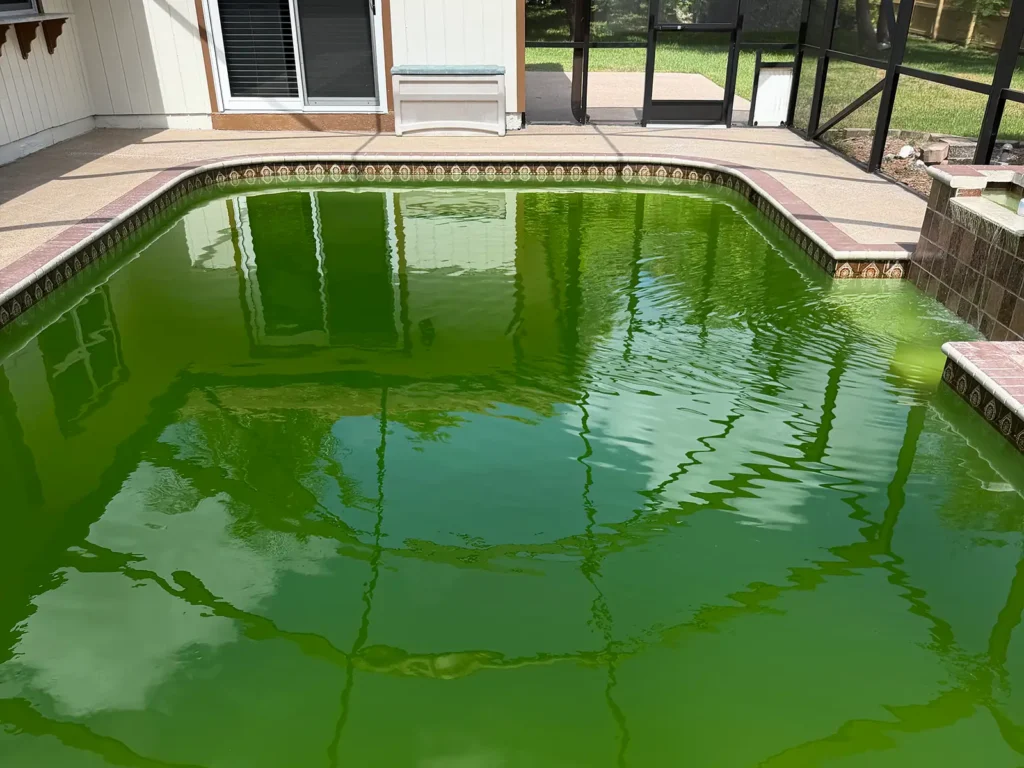
Does Green Water Always Mean Algae?
Most of the time, yes.
When homeowners return to green water after vacation, algae is almost always the culprit. However, the appearance of the water can provide clues about how far the problem has progressed.
Cloudy or Dull Water
Before a pool turns green, it often loses its sparkle. Cloudy or hazy water can be an early warning sign that algae is beginning to develop.
Light Green Water
Light green or pale teal water usually indicates an early algae bloom. At this stage, prompt treatment often clears the pool more quickly.
Dark Green Water
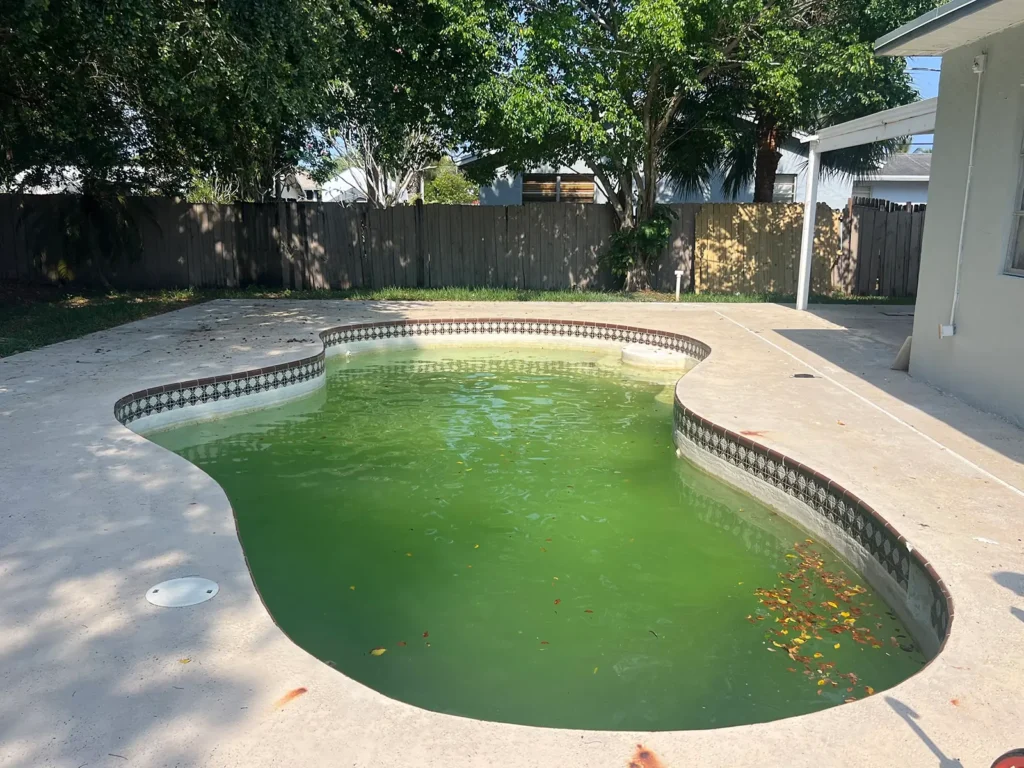
Dark green water usually means algae has become well established throughout the pool. Recovery often requires more chlorine, longer filtration times, and additional brushing.
Could It Be Metals Instead?
Although much less common, dissolved metals like copper can also give pool water a green tint. Unlike algae, metal-related discoloration often leaves the water looking clear rather than cloudy.
A simple water test can quickly determine whether you’re dealing with algae, metals, or another water chemistry issue.
What To Do When You Get Home
If you’re planning to tackle the cleanup yourself, follow these steps before adding large amounts of chemicals.
Remove Leaves and Debris
Start by removing as much organic debris as possible using a leaf net or skimmer.
Leaves, twigs, and other debris consume chlorine, making algae treatment less effective.
Test the Water
Before adding chemicals, test:
- Free chlorine
- pH
- Total alkalinity
- Cyanuric acid (stabilizer)
More from Finn’s Pool Services’ Blog
Reactive home maintenance can disrupt your schedule in West Palm Beach. Follow this simple guide to handling home maintenance without getting overwheled.
👉 https://finnspoolservices.com/home-maintenance-without-feeling-overwhelmed/
Knowing your starting point makes it much easier to correct the problem.
Balance the pH First
If the pH is too high, chlorine becomes much less effective.
Adjust the pH into the recommended range before shocking the pool to maximize the sanitizer’s effectiveness.
Shock the Pool
Use a chlorine product designed for swimming pools and follow the manufacturer’s dosage recommendations based on your pool’s volume.
Mild algae blooms often clear with one treatment, while more severe blooms may require additional applications over several days.
Brush Every Surface
Brush the walls, steps, benches, and floor thoroughly.
Brushing breaks apart algae that has attached itself to pool surfaces, allowing chlorine to work more effectively.
Keep the Pump Running
Run the circulation system continuously until the water begins clearing.
Good circulation helps distribute chemicals evenly while allowing the filter to capture dead algae.
Clean the Filter
As algae dies, it collects inside the filter.
Backwash a sand or DE filter, or rinse cartridge filters as needed to maintain proper water flow throughout the cleanup process.
Keep in mind that heavily neglected pools may require multiple rounds of shocking, brushing, and filter cleaning before the water returns to normal.
When DIY May Not Be Enough
Some green pools respond quickly to proper treatment. Others continue to stay cloudy or green even after multiple rounds of chemicals.
If your pool turned green after vacation, it may be time to call a professional if:
- The water remains dark green after repeated shocking.
- Chlorine levels won’t stay where they should.
- The pool walls still feel slippery after treatment.
- Filter pressure stays unusually high after cleaning.
- The water remains cloudy several days after treatment.
Before Resurfacing
After Plaster Application (Before Fill)
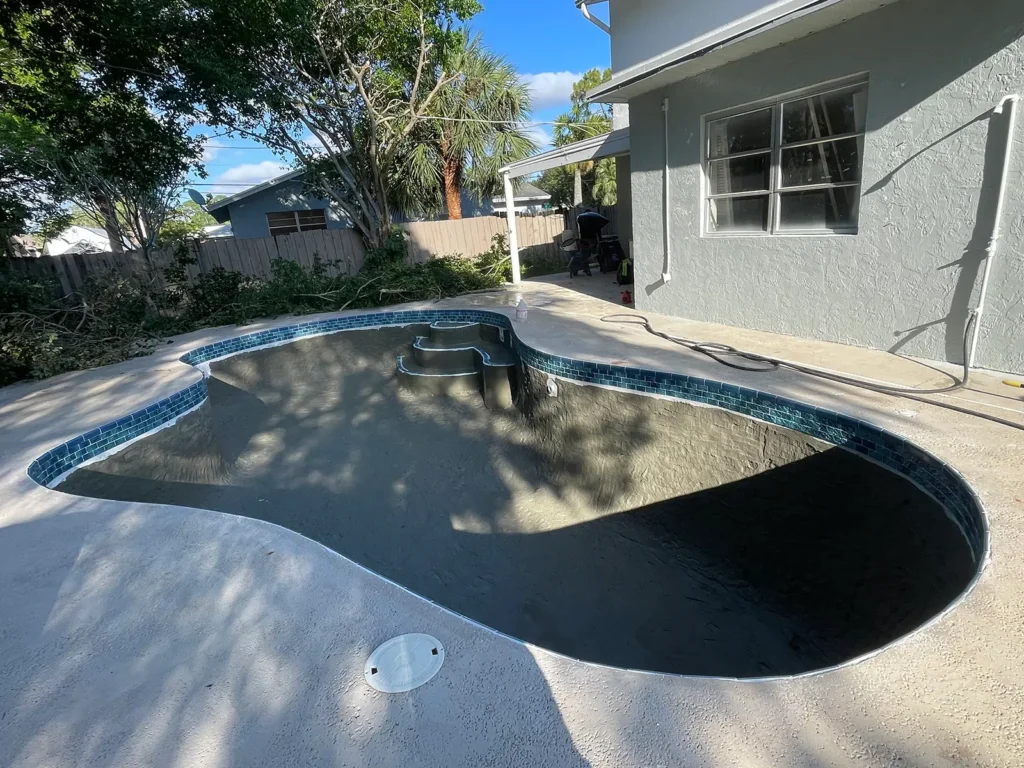
At Finn’s Pool Services, we’ve recovered many pools that turned green after vacation. In our experience, the biggest issue usually isn’t the algae itself. It’s that chlorine was depleted for several days before anyone noticed, giving algae enough time to spread throughout the pool.
When algae becomes established, simply adding more chlorine isn’t always the fastest solution. Proper water testing, circulation, filtration, and chemical balancing all work together to restore clear water.
How to Prevent a Green Pool Before Your Next Vacation
A little preparation before you leave can make a big difference when you return.
Before your next trip:
- Test and balance the water 24 to 48 hours before leaving.
- Raise chlorine to the upper end of the recommended range.
- Empty skimmer and pump baskets.
- Remove leaves and other debris from the pool.
- Make sure your pump timer is operating correctly.
- Have someone check the pool if you’ll be gone for an extended period.
If you’re planning to be away for more than a week, scheduling a weekly pool cleaning service is one of the easiest ways to keep your water balanced while you’re gone.
Frequently Asked Questions
How many days can a pool sit without maintenance?
During a South Florida summer, a pool can begin developing algae within several days if sanitizer levels drop too low. Exactly how quickly depends on water temperature, sunlight, rainfall, and the pool’s chemical balance before you leave.
Can I swim in a green pool?
It’s best to avoid swimming in a green pool until the water has been properly treated and tested. Algae often indicates that sanitizer levels have fallen below the recommended range, allowing bacteria and other contaminants to multiply.
Should I shock my pool before leaving for vacation?
Many homeowners choose to raise their chlorine level before leaving, especially during the summer. Just be sure the water chemistry is balanced first and that your circulation system will continue operating normally while you’re away.
How long does it take a green pool to clear?
A mild algae bloom may clear within a day or two after proper treatment. More severe algae growth can take several days and may require multiple rounds of brushing, filtration, and chemical adjustments.
Pool Turned Green After Vacation? Final Thoughts
Finding a green pool after vacation can be frustrating, but it’s usually a problem that can be corrected with the right approach.
Testing the water, restoring proper chemistry, removing debris, and maintaining good circulation are the keys to successful recovery. The sooner you begin treatment, the easier it usually is to bring the pool back to clear, healthy water.
If you’ll be away again in the future, a little preparation before you leave, or a scheduled maintenance visit while you’re gone, can help ensure your pool is ready to enjoy the day you return.
If you want help keeping your pool clean, balanced, and running properly, contact Finn’s Pool Services to schedule service by calling or using the form below.
Photo Credit: Hero Image by Eric Prouzet
- Phone: (561) 566-9344
- Email: [email protected]
-
Address: 1335 Old Okeechobee Rd. #450
West Palm Beach, FL 33401 - Mon – Fri: 8:00 AM – 6:00 PM
- Sat & Sun: 9:30 AM – 4:00 PM