Leaves in your pool after a storm are a familiar sight during South Florida’s hurricane season. A clean pool can quickly become covered with palm debris, twigs, insects, and fine dirt after a single stretch of windy weather.
Heavy storm debris is more than a cleanup problem. Organic material can increase chlorine demand, restrict water flow, load up the filter, and stain pool surfaces when it’s left sitting too long.
At Finn’s Pool Services, we see these problems throughout hurricane season in Palm Beach County. Some types of storm debris are relatively easy to remove. Others can create problems throughout the circulation and filtration system if they’re not addressed quickly.
Why Do Pools Get So Many Leaves During Hurricane Season?
Hurricane season brings frequent thunderstorms, tropical weather, saturated landscaping, and periods of stronger wind to South Florida. A hurricane doesn’t have to make landfall nearby for your backyard pool to collect significantly more debris.
Tropical Weather Doesn’t Have to Be Directly Over You
Tropical systems can influence weather well outside the immediate path of the storm. Wind and rain associated with tropical weather can knock loose leaves, small branches, flowers, and other material that eventually finds its way into nearby pools.
Even routine thunderstorms can create a surprising amount of cleanup when they move through an area with dense landscaping.
Some Landscaping Creates Much More Pool Debris
The vegetation around the property makes a major difference.
From Sean Finnerty’s experience servicing South Florida pools, three trees and plants stand out as particularly frustrating around swimming pools: bamboo, oak trees, and black olive trees.
They can produce a steady supply of leaves and other plant material, and windy weather makes the problem considerably worse. A heavily landscaped property may require much more cleanup during storm season than a nearby pool with fewer trees around the enclosure.
Debris Doesn’t Have to Come From Your Yard
Wind-blown leaves can travel beyond the property where they originated. Your own landscaping may be trimmed and maintained while leaves and lighter debris from neighboring properties still end up in your pool.
That’s one reason homeowners can suddenly see much heavier debris during stormy periods even when nothing has changed in their own backyard.
What Happens When Leaves and Storm Debris Sit in Your Pool?
Leaves are usually the first thing homeowners notice after a storm, but they’re not necessarily the most difficult debris Finn’s encounters.
Sean says fine sand can be much harder to remove than leaves or other larger material. Leaves can be skimmed or collected with a leaf rake. Fine sand settles onto the pool floor and requires more effort to remove completely.
Storm debris can cause several problems when it’s allowed to remain in the pool.
Organic Debris Increases Chlorine Demand
Leaves and other organic material add contaminants that chlorine has to handle. A pool dealing with a large debris load may consume sanitizer faster than it normally would.
That doesn’t mean leaves automatically cause algae. If chlorine drops too low while warm water, organic material, and inadequate circulation are present, conditions can become much more favorable for algae growth.
Leaves Can Stain Pool Surfaces
Leaves and other plant material can release organic compounds as they sit in the water. When debris remains against the pool floor, steps, or other surfaces, discoloration and organic staining can develop.
Removing the debris promptly is much easier than dealing with stains after they’ve formed.
Full Baskets Can Restrict Water Flow
A skimmer basket packed with leaves restricts the amount of water moving through the skimmer.
Sean says one of the biggest mistakes Finn’s sees is homeowners failing to empty skimmer baskets during periods of heavy debris. When baskets repeatedly remain overloaded, they can begin to weaken or break down.
The pump basket matters too. Allowing debris to accumulate there can further restrict circulation through the system.
Decaying Organic Material Can Add Phosphates
As leaves and other organic material break down in the water, they can contribute phosphates and increase the contaminant load the sanitation and filtration systems need to handle.
Phosphates alone don’t mean a pool will develop algae, but leaving large amounts of decomposing material in the water creates additional work for a pool that’s already dealing with South Florida’s demanding summer conditions.
Why Hurricane Season Is Hard on South Florida Pool Chemistry
Hurricane season overlaps with some of the toughest months of the year for maintaining pool water in South Florida.
The water is warm, sunlight is intense, afternoon rain is frequent, and stormy weather can repeatedly introduce organic debris. Pools may also see heavier use during summer.
All of those factors can affect sanitizer demand.
A pool that was properly balanced before a storm doesn’t automatically need a large chemical treatment afterward. What it does need is attention. Remove the debris, restore normal circulation, and test the water to see what actually changed.
We’ve covered the seasonal chemistry side in more detail in our article about why your pool loses chlorine fast in summer.
What to Do With Leaves in Your Pool After a Storm
Once the storm has safely passed, getting debris out of the water should be one of your first priorities.
1. Make Sure the Storm Is Over
Don’t head onto the pool deck while thunder or lightning is still nearby.
The National Weather Service recommends waiting at least 30 minutes after the last sound of thunder before resuming outdoor activities.
2. Remove Large Floating Debris First
Use a leaf rake or skimmer to remove floating leaves, palm debris, branches, and other large material before it becomes waterlogged and sinks.
Getting the biggest debris out first also reduces how much material reaches your skimmer baskets and filtration system.
3. Empty the Skimmer and Pump Baskets
Check the skimmer baskets even if you emptied them recently. During windy conditions, they can fill surprisingly quickly.
The pump basket should also be inspected and cleared when necessary. Turn the equipment off before opening or servicing the pump basket.
4. Remove Debris From the Pool Floor
Don’t leave piles of leaves sitting on the bottom.
For heavier debris, Sean recommends using a leaf catcher when vacuuming rather than allowing all of that material to travel directly toward the filter.
This is another common mistake Finn’s sees after storms. A leaf catcher collects larger debris before it reaches the rest of the system and adds unnecessary load to the filter.
5. Check Circulation
Once baskets are clear and the equipment is operating normally, make sure water is moving through the skimmers and returning to the pool.
Weak circulation after a major debris event may indicate that something is still restricting flow.
6. Test the Water Before Adding Chemicals
Don’t automatically shock the pool because there was a storm.
Test the water first. A significant debris load may have increased chlorine demand, but the appropriate treatment depends on the pool’s actual chemistry and condition.
7. Check the Filter
Fine dirt, sand, and organic material eventually place additional demand on the filter.
Sean sees problems when homeowners allow a heavily loaded filter to go too long without cleaning or service. Restricted flow makes the circulation system work harder and can eventually contribute to equipment problems.
Can Too Many Leaves Damage Pool Equipment?
They can create equipment problems when enough debris accumulates.
One of the first places to watch is the skimmer basket. As leaves pack tightly inside it, water flow through the skimmer becomes restricted. Sean notes that skimmer baskets left overloaded too often can eventually weaken and break.
If debris makes it beyond the skimmer, the pump basket provides another line of defense. That basket also needs to be emptied so water can continue moving properly through the system.
The filter is another concern. Sending large amounts of storm debris directly into the filtration system increases its workload, especially when you’re dealing with fine sand and dirt in addition to leaves.
This is why Sean recommends a leaf catcher when vacuuming a pool with a substantial amount of larger debris. It keeps much of that material from being sent directly toward the filter.
Should You Run Your Pool Pump After a Storm?
Circulation and filtration are important parts of cleaning up after a storm, but inspect the equipment first.
If the equipment pad experienced flooding or you see signs of electrical or physical damage, don’t turn the system on until it has been properly evaluated.
If the equipment is dry and undamaged, clear the skimmer and pump baskets before restarting the system. Once it’s operating, check that circulation appears normal and allow the filtration system to help remove suspended material from the water.
There’s no need to automatically run the pump continuously for a predetermined amount of time. The appropriate filtration time depends on the amount of debris, water clarity, equipment, and condition of the pool.
How to Reduce Leaves and Debris During Hurricane Season
You can’t keep every leaf out of a South Florida pool during storm season, especially on a heavily landscaped property. You can make cleanup much more manageable.
Keep nearby landscaping maintained and trim trees appropriately before severe weather approaches. During stretches of windy weather, check skimmer baskets more frequently than you normally would.
Remove leaves and other organic debris promptly instead of allowing them to settle and decompose on the pool floor. Keep an eye on the pump basket and filter as the debris load increases.
Water chemistry also deserves closer attention during periods of frequent storms. Maintaining appropriate sanitizer levels before the pool is hit with additional organic material gives you a much better starting point.
Avoid placing loose tarps, unsecured covers, or other improvised materials over the pool before severe weather. High winds can turn unsecured items into additional debris or hazards.
When Storm Debris Becomes More Than a Cleaning Problem
Most post-storm debris can be handled by removing the material, restoring normal circulation, cleaning the filtration system as needed, and checking the water chemistry.
Some conditions suggest there’s more going on.
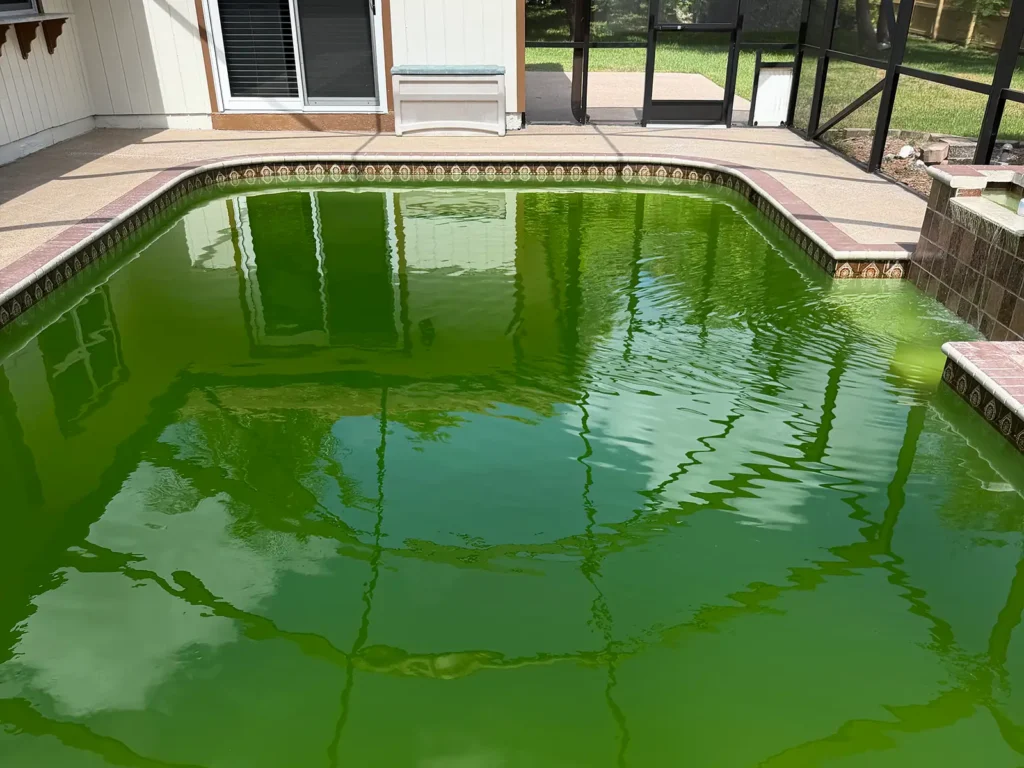
Cloudy or green water may indicate that sanitation or filtration has fallen behind. Chlorine that repeatedly tests low after treatment can indicate unusually high sanitizer demand. Weak circulation or difficulty maintaining pump prime may point to a restriction somewhere in the system.
Persistent high filter pressure or poor flow after normal cleaning also deserves attention, particularly after a pool has collected a large amount of fine sand or dirt.
And if leaves have been sitting against the pool surface long enough to leave visible dark stains, removing the debris may not remove the discoloration.
These are situations where diagnosing the underlying problem becomes more important than simply continuing to skim leaves.
More from Finn’s Pool Services’ Blog
Reactive home maintenance can disrupt your schedule in West Palm Beach. Follow this simple guide to handling home maintenance without getting overwheled.
👉 https://finnspoolservices.com/home-maintenance-without-feeling-overwhelmed/
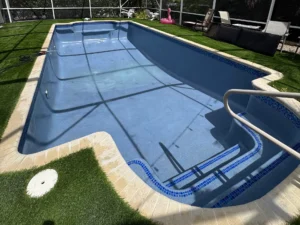
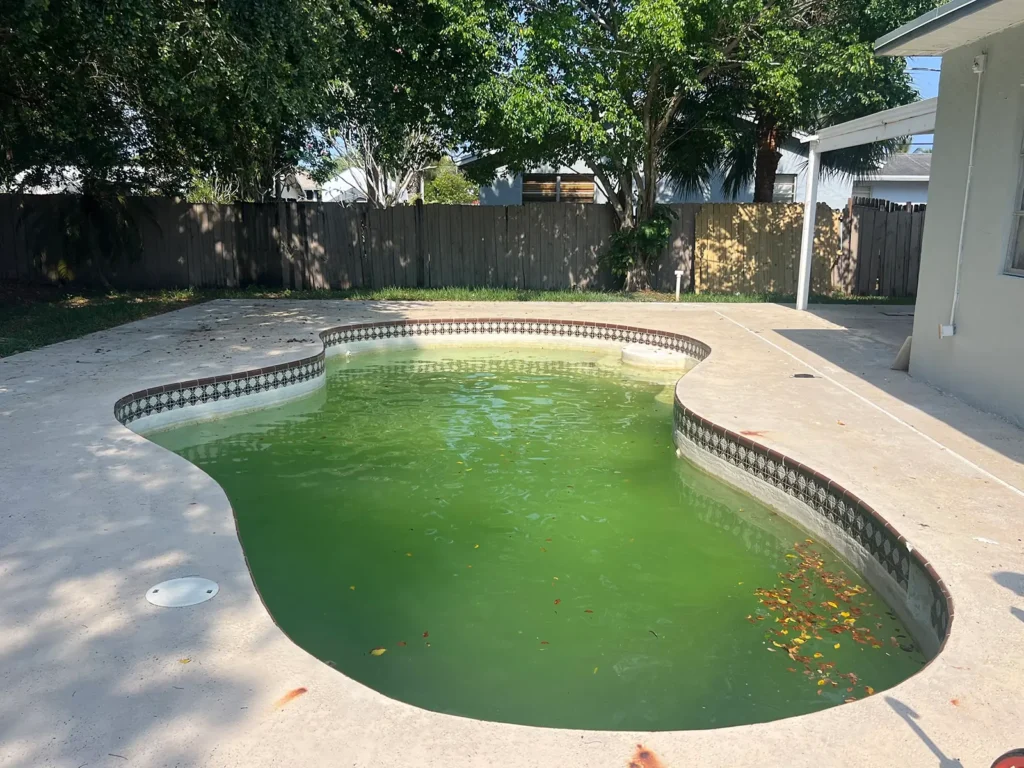
Before Resurfacing
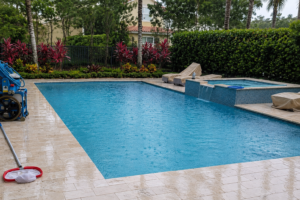
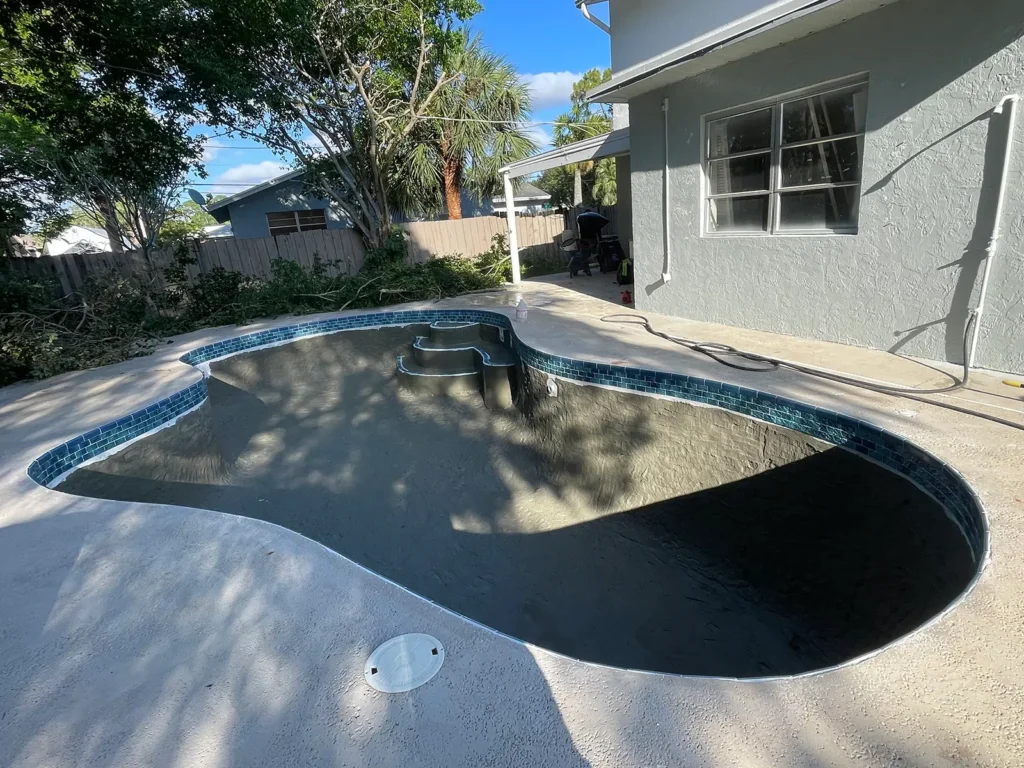
After Plaster Application (Before Fill)
Frequently Asked Questions
Can Rain Make a Pool Unsafe?
Rain itself doesn’t automatically make a swimming pool unsafe.
Problems are more likely after significant storms that affect water chemistry, introduce substantial debris, cause contaminated runoff to enter the pool, or leave the water cloudy.
Thunder and lightning are separate safety hazards and are reason enough to stay out of the water.
Should I Shock My Pool After Every Storm?
No.
A light rain doesn’t automatically require shock, and even after a major storm, the better approach is to inspect the pool and test the water before deciding what treatment it needs.
If chlorine has fallen too low, algae is developing, or the pool experienced significant contamination, additional chlorine or shock treatment may be appropriate.
Can Lightning Travel Through Pool Water?
Lightning presents a serious hazard to swimmers, which is why you should leave the pool when thunder is heard.
Follow National Weather Service guidance and wait at least 30 minutes after the last thunder before returning to the pool.
Is It Safe to Swim After Rain?
It can be.
If the storm has completely passed, there hasn’t been thunder for at least 30 minutes, the water remains clear, there was no significant runoff, and your water chemistry is where it should be, swimming can resume.
After a major storm, checking the pool first is a much better rule than waiting an arbitrary number of hours.
Leaves in Your Pool After a Storm: Final Thoughts
Finding leaves in your pool after a storm is part of hurricane season for many South Florida homeowners, especially those with heavily landscaped properties.
The important part is how quickly you deal with them.
Remove heavy debris before it sinks, keep skimmer and pump baskets clear, pay attention to the filter, and test the water after significant storms instead of automatically adding chemicals. Fine sand and dirt may require more work than the leaves you can see floating on the surface.
A little extra attention during stormy periods can prevent a pile of leaves from becoming a circulation, staining, filtration, or water chemistry problem.
If keeping up with storm debris is becoming a regular part of your weekends, Finn’s weekly pool cleaning service can handle routine cleaning, water balancing, and pool maintenance throughout Palm Beach County.
Photo Credit: Hero Image by Eric Prouzet
- Phone: (561) 566-9344
- Email: [email protected]
-
Address: 1335 Old Okeechobee Rd. #450
West Palm Beach, FL 33401 - Mon – Fri: 8:00 AM – 6:00 PM
- Sat & Sun: 9:30 AM – 4:00 PM