A South Florida afternoon can go from bright sunshine to heavy rain and back again surprisingly quickly. Once the storm passes and the sun comes back out, you may be ready to head straight for the pool.
So, can you swim after rain in a pool?
Usually, yes, as long as the storm has completely passed and the pool water is clear and properly balanced. A normal Florida rain doesn’t automatically make a well-maintained swimming pool unsafe.
Heavy storms can create conditions that deserve a closer look before you get back in. Rain can affect water chemistry, wind can fill the pool with organic debris, and runoff from surrounding areas can introduce contaminants. Thunder and lightning create a separate and much more immediate safety concern.
Here’s what Florida pool owners should check after a storm.
How Does Rain Affect Your Pool Water?
A brief afternoon shower usually won’t create a major water chemistry problem. Several inches of rain accompanied by strong winds and flooding can have a much greater effect.
Water Chemistry Can Become Diluted
Heavy rainfall adds a substantial amount of fresh water to the pool. Depending on how much rain falls and whether the pool overflows, concentrations of chlorine and other dissolved chemicals can change.
The effect varies from pool to pool, which is why testing after a major storm is more useful than automatically adding chemicals.
Chlorine Demand Can Increase
Rain isn’t the only thing entering the pool during a storm.
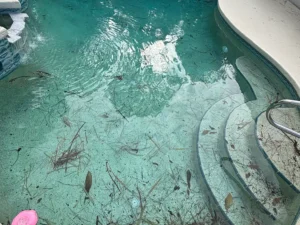
Wind can carry leaves, pollen, insects, dirt, and other organic material into the water. Chlorine reacts with these contaminants, which can increase chlorine demand and leave less sanitizer available in the water.
This is one of several reasons why your pool loses chlorine fast in summer, when intense sunlight, warm weather, frequent storms, and heavier swimming activity can all occur at the same time.
Runoff Can Introduce Contaminants
Runoff is a bigger concern than rainwater itself.
If a heavy storm causes water from your lawn, landscaping, or patio to flow into the pool, it may carry soil, fertilizers, mulch, organic matter, and other contaminants with it.
Pools that receive significant runoff should be cleaned, circulated, and tested before swimming resumes.
Debris Creates More Work for the Sanitizer
Leaves, flowers, insects, and other organic debris increase chlorine demand as they begin breaking down in the water.
Removing that material quickly after a storm helps your circulation and sanitation systems do their jobs more effectively.
When Should You Wait to Swim After Rain?
You don’t need to avoid the pool simply because it rained. There are, however, several conditions that should keep swimmers out of the water.
There’s Still Thunder or Lightning
This is the most important reason to stay out of the pool after a Florida storm.
The National Weather Service recommends waiting at least 30 minutes after the last sound of thunder before returning to outdoor activities.
Don’t use sunshine as the signal that it’s safe. Florida thunderstorms can move quickly, and lightning may still be a threat even after the heaviest rain has passed.
The Water Is Cloudy
You should be able to clearly see through the pool water.
Poor visibility can indicate a filtration, sanitation, or water chemistry problem, and it also creates a physical safety issue because swimmers in distress can be harder to see.
The Centers for Disease Control and Prevention emphasizes maintaining proper disinfectant levels, pH, and water clarity as part of healthy swimming pool operation.
You See Algae
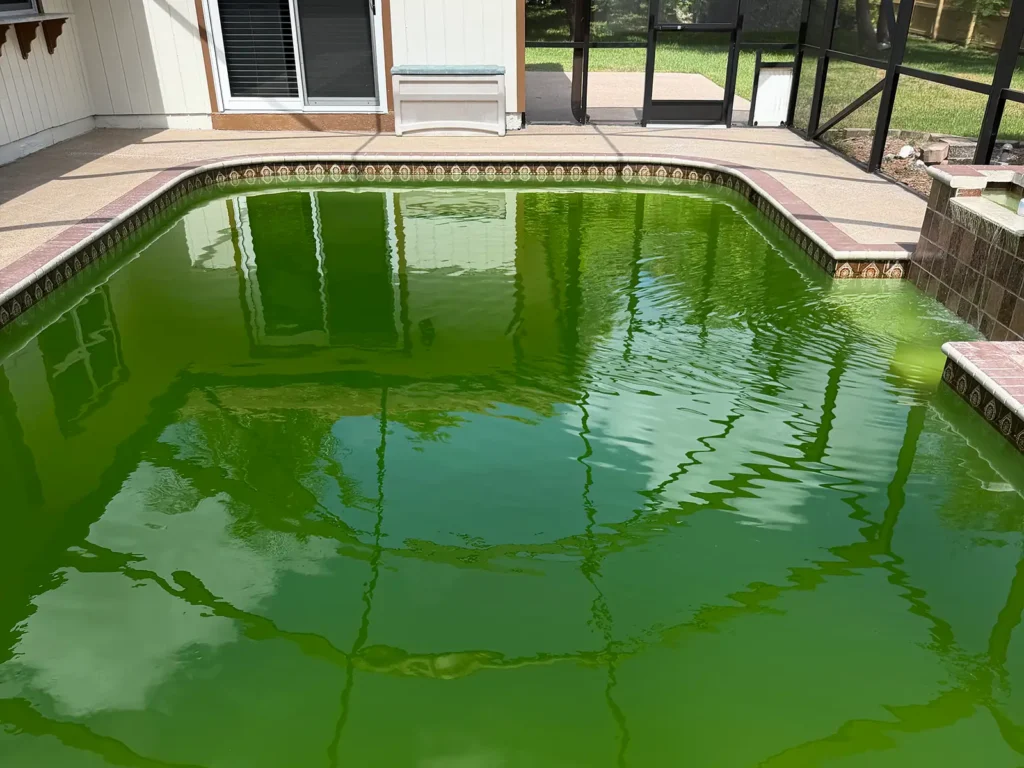
Green water, slippery surfaces, or visible algae patches are signs that the pool needs attention before anyone swims.
A storm may contribute to the conditions that allow algae to develop, especially if chlorine was already running low beforehand.
Significant Runoff Entered the Pool
If muddy water, mulch, fertilizer, or other material washed into the pool from the surrounding property, wait.
Remove the debris, allow the filtration system to work, and test and correct the water chemistry before swimming.
You Don’t Know What the Water Chemistry Looks Like
After a significant storm, testing removes the guesswork.
Check the water before assuming that the chlorine and pH remained where they were before the rain.
Why Florida Storms Affect Pools Differently
South Florida’s rainy season creates a particular set of challenges for residential pools.
During summer, a pool may already be dealing with intense UV exposure, warm water, and increased swimmer use when an afternoon thunderstorm arrives. Strong winds can add leaves and other debris, while a heavy downpour can raise the water level significantly in a short period.
At Finn’s Pool Services, we see the effects during regular service visits throughout Palm Beach County. As Sean Finnerty, owner of Finn’s Pool Services, explains:
“After a heavy summer storm, it’s common for us to find chlorine lower than expected during the next service visit, especially if the pool collected leaves and other debris overnight.”
The debris is important. Organic material creates additional chlorine demand, so a pool covered with leaves after a storm may behave very differently from a clean pool that received the same amount of rainfall.
That’s also why there isn’t one chemical treatment that every Florida pool needs after it rains.
5 Things to Check Before Swimming After Rain
After the thunder has passed, take a few minutes to check the pool before getting back in.
1. Water Clarity
Look into the deepest part of the pool.
The water should be clear enough to easily see the bottom. If the pool is cloudy or murky, wait until you’ve identified and corrected the problem.
2. Chlorine
Test the free chlorine level rather than assuming the storm depleted it.
A properly maintained pool may still have adequate sanitizer after rain. Another pool may test low because it was already near the bottom of its target range before the storm or accumulated substantial organic debris.
3. pH
Check pH along with chlorine.
A major rainfall event can affect the pool’s overall water balance, and maintaining the appropriate pH is important for swimmer comfort and effective sanitation.
4. Debris and Runoff
Empty the skimmer baskets and remove leaves, branches, insects, and other material from the water.
Pay particular attention to signs that water flowed into the pool from the lawn or landscaping.
5. Circulation and Filtration
Make sure the pump is operating normally and water is circulating through the filtration system.
If the pool collected a large amount of debris, check the baskets and filter as needed so restricted flow doesn’t interfere with cleanup.
More from Finn’s Pool Services’ Blog
Reactive home maintenance can disrupt your schedule in West Palm Beach. Follow this simple guide to handling home maintenance without getting overwheled.
👉 https://finnspoolservices.com/home-maintenance-without-feeling-overwhelmed/
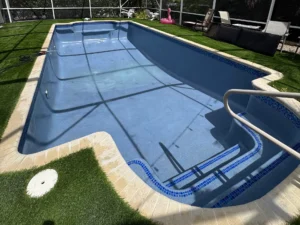
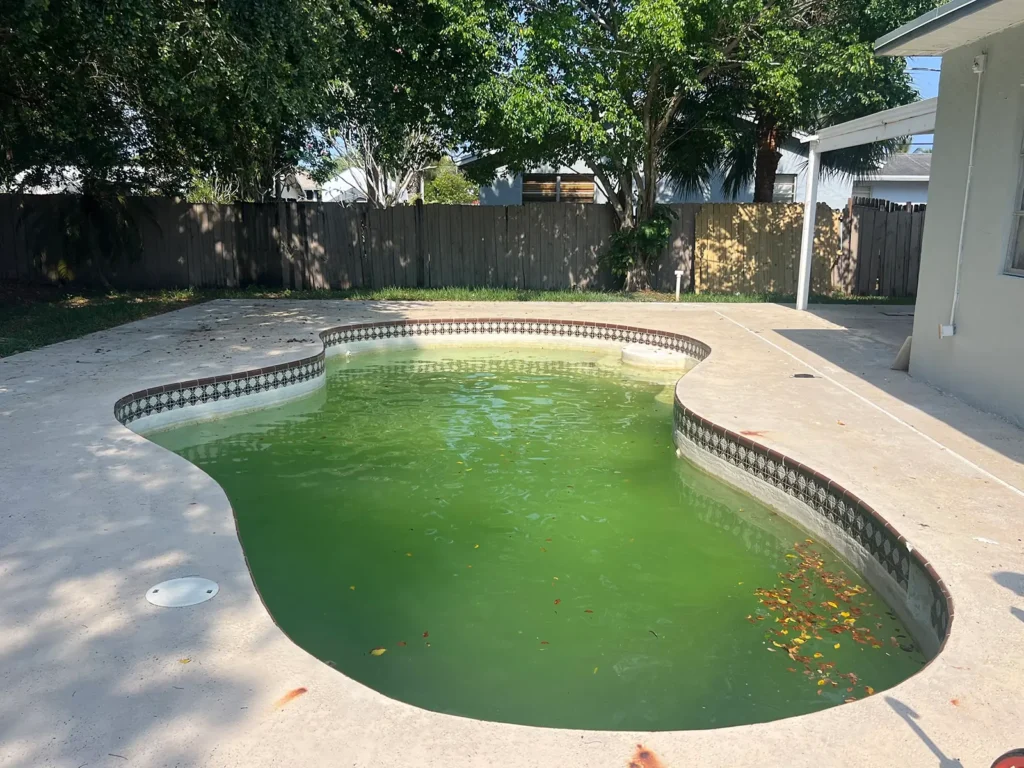
Before Resurfacing
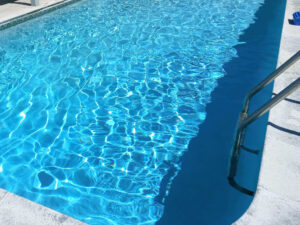
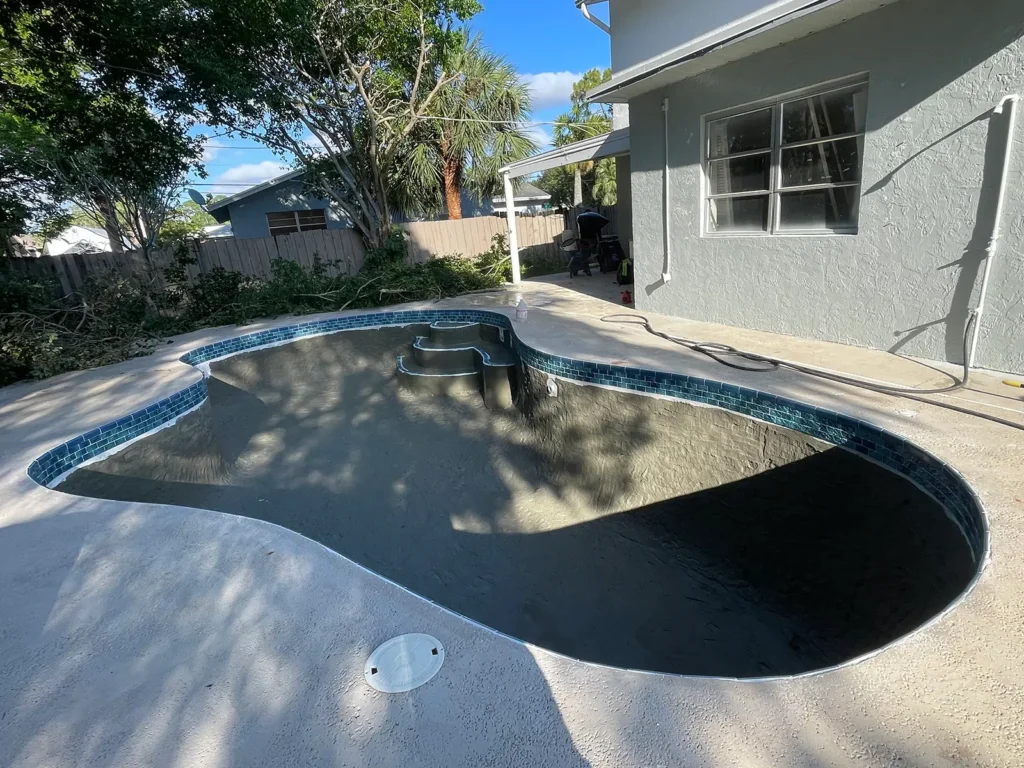
After Plaster Application (Before Fill)
Frequently Asked Questions
Can Rain Make a Pool Unsafe?
Rain itself doesn’t automatically make a swimming pool unsafe.
Problems are more likely after significant storms that affect water chemistry, introduce substantial debris, cause contaminated runoff to enter the pool, or leave the water cloudy.
Thunder and lightning are separate safety hazards and are reason enough to stay out of the water.
Should I Shock My Pool After Every Storm?
No.
A light rain doesn’t automatically require shock, and even after a major storm, the better approach is to inspect the pool and test the water before deciding what treatment it needs.
If chlorine has fallen too low, algae is developing, or the pool experienced significant contamination, additional chlorine or shock treatment may be appropriate.
Can Lightning Travel Through Pool Water?
Lightning presents a serious hazard to swimmers, which is why you should leave the pool when thunder is heard.
Follow National Weather Service guidance and wait at least 30 minutes after the last thunder before returning to the pool.
Is It Safe to Swim After Rain?
It can be.
If the storm has completely passed, there hasn’t been thunder for at least 30 minutes, the water remains clear, there was no significant runoff, and your water chemistry is where it should be, swimming can resume.
After a major storm, checking the pool first is a much better rule than waiting an arbitrary number of hours.
Can You Swim After Rain in a Pool? Final Thoughts
So, can you swim after rain in a pool? In most cases, yes. Rain alone doesn’t automatically make a properly maintained swimming pool unsafe.
South Florida’s heavier storms deserve more attention because they can bring wind-blown debris, significant rainfall, runoff, and changes in water chemistry. Thunder and lightning also mean everyone should stay out until the storm has safely passed.
After a major storm, check the water clarity, remove debris, confirm that the equipment is operating properly, and test the water before getting back in.
For homeowners who don’t want to keep adjusting their pool care around Palm Beach County’s summer weather, a weekly pool cleaning service can help maintain consistent water chemistry, circulation, and cleanliness throughout the rainy season.
Photo Credit: Hero Image by Eric Prouzet
- Phone: (561) 566-9344
- Email: [email protected]
-
Address: 1335 Old Okeechobee Rd. #450
West Palm Beach, FL 33401 - Mon – Fri: 8:00 AM – 6:00 PM
- Sat & Sun: 9:30 AM – 4:00 PM