Understanding the true pool resurfacing cost in Palm Beach County can be frustrating for homeowners. Estimates often vary from one contractor to another, and online price ranges rarely reflect the full scope of work. The reality is that resurfacing costs are not random. They are based on specific material choices, preparation requirements, structural conditions, and design complexity.
If you are evaluating proposals, knowing what drives the price to resurface a pool allows you to compare estimates confidently and avoid unexpected increases once the project begins.
More from Finn’s Pool Services’ Blog
Reactive home maintenance can disrupt your schedule in West Palm Beach. Follow this simple guide to handling home maintenance without getting overwheled.
👉 https://finnspoolservices.com/home-maintenance-without-feeling-overwhelmed/
Surface Material Selection and Durability
The finish you choose is the primary factor influencing pool resurfacing cost. Each material carries a different upfront price, lifespan, and maintenance profile.
Standard white plaster typically has the lowest initial replaster cost. It delivers a smooth, traditional appearance, but it is more vulnerable to etching and staining if water chemistry is not carefully maintained.
Quartz-enhanced finishes combine plaster with ceramic-coated quartz aggregate. Quartz increases surface hardness and improves resistance to staining and abrasion. According to the U.S. Geological Survey, quartz is one of the hardest common minerals used in construction materials, which explains its durability when incorporated into pool finishes.
Pebble and exposed aggregate finishes represent the most durable option. These finishes embed natural stones within the plaster matrix, reducing the amount of exposed cement paste. This improves performance under chemical stress and heavy usage. While pebble finishes increase the initial pool resurfacing cost, they often extend the time between refinishing cycles.
Material choice affects both immediate budget and long-term value, especially in Palm Beach County where UV exposure and year-round use accelerate surface wear.
For a detailed breakdown of finish options, visit our professional pool resurfacing page.
Surface Preparation and Underlying Damage
Surface material is only one part of the total cost. Preparation and repair work significantly impact the final number.
Every resurfacing project should begin with a comprehensive inspection. Technicians evaluate hollow spots, structural cracks, bond beam deterioration, and areas of delamination.
If the shell is structurally sound, the pool resurfacing cost may align closely with base material estimates. If hidden damage is discovered after draining the pool, the project scope expands. Structural corrections increase labor hours and material requirements.
In Florida’s climate, prolonged heat, moisture exposure, and inconsistent water chemistry can accelerate degradation. The National Plasterers Council Technical Manual emphasizes that proper surface preparation is essential for plaster adhesion and long-term durability.
Applying new finish material over compromised substrate often leads to premature bond failure. When resurfacing shifts from cosmetic improvement to structural repair, the overall pool refinishing cost increases accordingly.
Age and Maintenance History of the Pool
The history of your pool shell also affects cost. Older pools in West Palm Beach frequently have multiple plaster layers from previous resurfacing projects.
Each additional layer adds weight and can reduce adhesion strength. Excessive buildup may require a full chip-out, where existing material is removed down to the original concrete shell. This labor-intensive process increases the pool resurfacing cost but creates a stronger bond for the new finish.
Aging shells may also develop microcracking due to soil movement, groundwater pressure, or long-term chemical exposure. Palm Beach County’s sandy soil and high water table can compound these stresses. If structural fatigue is present, repairs must be completed before refinishing can begin.
A well-maintained pool generally supports a more straightforward resurfacing process. A neglected or aging shell often requires deeper evaluation and corrective work.
👉 More from Finn’s Pool Services’ Blog
You can learn more about the hidden costs of choosing the wrong pool maintenance partner in our detailed article about how pool maintenance affects home insurance prices in Florida.
Architectural Complexity and Water Features
Design complexity plays a major role in determining the price to resurface a pool.
A standard rectangular pool is relatively straightforward to refinish. Custom shapes, elevation changes, and additional water features increase both surface area and finishing time.
Features that raise pool resurfacing cost include:
-
Built-in spas and integrated hot tubs
-
Tanning ledges or Baja shelves
-
Beach entries and sloped transitions
-
Waterfalls, scuppers, and deck jets
-
Detailed tile bands and mosaic inlays
Custom elevations and transition points require detailed hand application to ensure proper thickness and long-term adhesion.
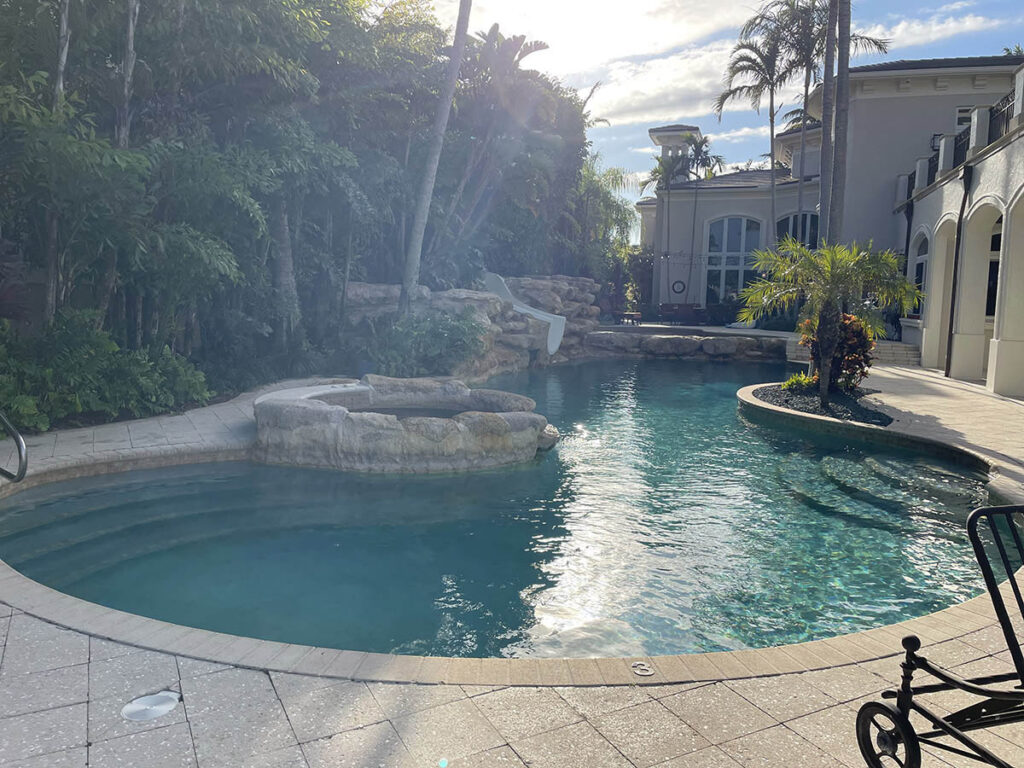
These elements require detailed hand application and precise thickness control. Vertical surfaces, tight curves, and transitions demand specialized techniques to maintain adhesion and structural integrity.
Greater architectural detail means more labor hours and higher material consumption, which directly increases total project cost.
Environmental Factors in Palm Beach County
Local environmental conditions also influence both installation and long-term durability. Waterfront exposure increases environmental stress on pool finishes throughout the year.
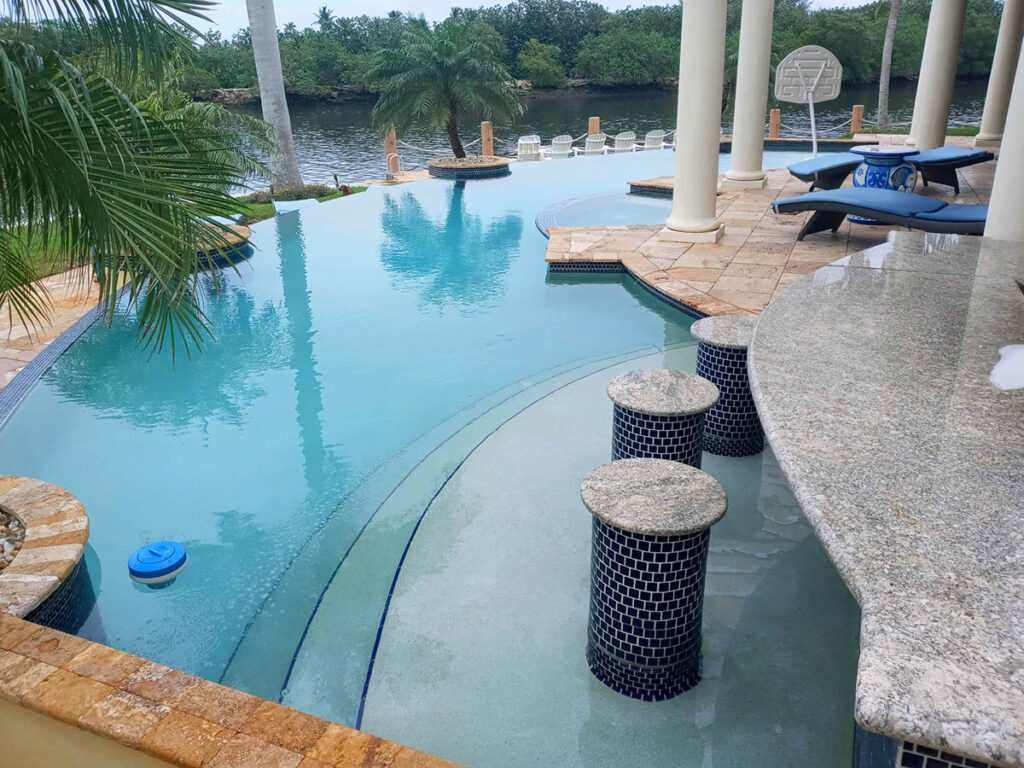
Palm Beach County pools operate year-round under intense UV exposure. High humidity and salt air can impact curing conditions during application. Proper scheduling and surface management during installation are essential to protect finish integrity.
Long-term maintenance also affects total pool remodel cost over time. Finishes exposed to fluctuating chemistry or high chlorine demand degrade faster. Consistent pool maintenance reduces the likelihood of premature resurfacing and helps protect your investment.
Conclusion
The true pool resurfacing cost in Palm Beach County depends on more than square footage. Surface material, preparation requirements, structural condition, architectural detail, and environmental exposure all influence the final number.
Addressing hidden issues early protects the structural integrity of your pool and reduces the risk of repeat work. Choosing the right finish for Florida’s climate improves long-term performance and overall value.
If you are planning resurfacing or evaluating estimates, a professional inspection provides clarity before work begins. West Palm Beach homeowners can explore local options and detailed restoration information on our West Palm Beach Pool Resurfacing page.
Pool Resurfacing Cost FAQs
What is the average pool resurfacing cost in Palm Beach County?
Costs vary depending on finish material, structural repairs, and design complexity. On-site evaluations provide the most accurate estimate.
How often should a pool be resurfaced in Florida?
Standard plaster typically requires resurfacing every 7 to 10 years. Quartz and pebble finishes often last longer when supported by proper water chemistry and routine pool maintenance.
Does damage increase the pool resurfacing cost?
Yes. Cracks, hollow spots, and delamination must be corrected before refinishing. These repairs increase both labor and material requirements.
Understanding the real pool resurfacing cost begins with a proper inspection. Material selection, structural integrity, and architectural detail all influence your final investment. If you’re evaluating resurfacing in West Palm Beach or anywhere in Palm Beach County, a professional assessment will give you clarity before work begins.
Photo Credit: Hero Image by Eric Prouzet
- Phone: (561) 566-9344
- Email: [email protected]
-
Address: 1335 Old Okeechobee Rd. #450
West Palm Beach, FL 33401 - Mon – Fri: 8:00 AM – 6:00 PM
- Sat & Sun: 9:30 AM – 4:00 PM