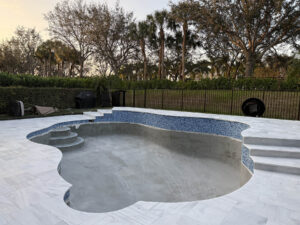
Copper stains look identical to algae. Many homeowners treat the wrong problem first. To remove copper stains from pool surfaces, you must identify if you are dealing with organic growth or dissolved metals bonded to the plaster. Surface discoloration often stems from mineral management issues. Professional testing and chemistry control are the only ways to solve the root cause.
Consistent mineral control through a professional pool cleaning service prevents these problems from returning. Understanding the difference between algae and metal staining is the first step in the treatment process.
Updated February 2026
Identifying Organic vs. Metal Stains
Algae is organic. Copper stains are inorganic. Algae typically appears green and slimy. It reacts to chlorine shock, brushes off easily, and responds to oxidation.
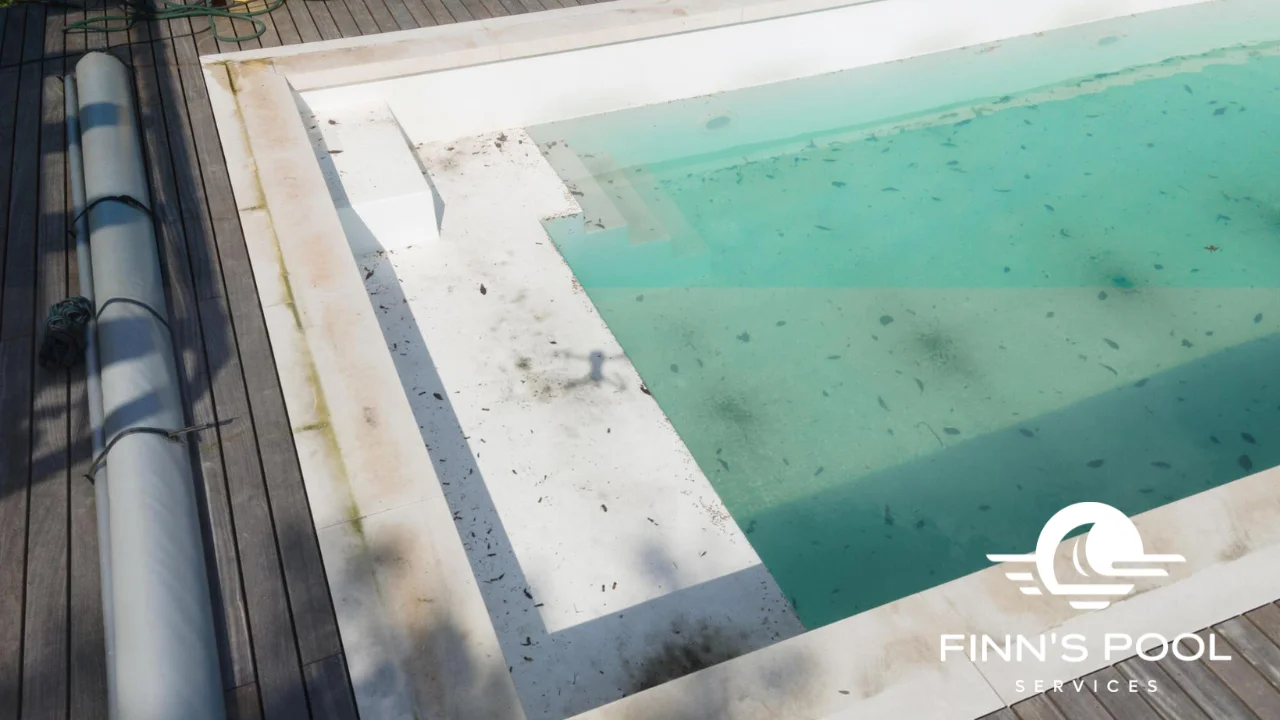
Copper stains appear teal, turquoise, black, or brown. These stains do not brush away. Discoloration often worsens after shocking the pool. Stains commonly appear near return lines, steps, or benches. When chlorine levels rise in water containing dissolved copper, oxidation occurs. The copper falls out of suspension and bonds to the plaster. This mineral fallout requires specific chemical treatment to remove.
Sources of Copper in Pool Water
Copper enters the water through the water source or mechanical equipment.
Corroding Heater Coils: Low pH or aggressive water chemistry corrodes copper heat exchanger coils inside gas heaters. This is a frequent cause of staining in South Florida.
Well Water: Well systems often contain dissolved metals. Without pre-treatment, these metals enter the pool during refills.
Low-Quality Algaecides: Inexpensive algaecides often contain copper sulfate. Repeated use raises copper concentration levels.
Plumbing Components: Older plumbing or copper fittings leach metals into circulating water.
Heater corrosion combined with high pH is the most frequent cause of copper staining in Palm Beach County pools.
The Role of pH in Metal Fallout
High pH triggers metal fallout. When pH rises above 7.8, dissolved metals lose stability and precipitate out of suspension. They bond to the plaster interior. Brushing or standard chlorination cannot remove these deposits.
High pH is the trigger.
When pH rises above the recommended 7.2–7.8 range, dissolved metals lose stability and precipitate out of suspension. This is called “metal fallout.”
Low pH causes copper corrosion. High pH causes copper staining. This balance makes ongoing chemistry management a requirement for mineral control. Managing the Langelier Saturation Index (LSI) ensures your water remains balanced and non-corrosive.
Why Scrubbing Cannot Remove Copper Stains From Pool Surfaces
Homeowners often attempt to use physical force to scrub away discoloration. Because copper staining is a chemical bond between the mineral and the plaster, physical abrasion is ineffective. Attempting to mechanically remove copper stains from pool plaster often results in permanent damage to the finish. Professional chemical lifting agents are required to break the ionic bond without compromising the structural integrity of the pool shell.
Testing for Metal Content
Confirm metal levels with a dedicated copper test. Standard pool test kits only measure chlorine and pH. To properly remove copper stains from pool plaster, use professional digital scans or laboratory water analysis.
Confirmation prevents guesswork. Misdiagnosing algae as metal staining often makes the discoloration worse.
Professional Equipment Needed to Remove Copper Stains From Pool Water
Identifying the presence of copper is only the first step. To permanently remove copper stains from pool environments, we evaluate the concentration of sequestering agents in the water. We use high-precision digital scanners to determine if the copper is “free” or “sequestered.” This data allows us to calculate the exact dosage of ascorbic acid and citric blends required to remove copper stains from pool surfaces safely.
Chemical Stain Removal Process
If testing confirms the presence of copper, treatment follows a specific technical sequence:
Step 1: Lower Chlorine Levels. High chlorine levels interfere with metal lifting agents.
Step 2: Apply Ascorbic Acid. Ascorbic acid reduces oxidized metals and lifts the stain from the plaster. Our team monitors this step to prevent over-treatment.
Step 3: Add a Metal Sequestrant. Sequestrants bind dissolved metals. This keeps them suspended so they pass through the filtration system without restaining the surface.
Step 4: Restore Water Balance Slowly. Chemistry must be corrected gradually. Rapid changes cause metals to redeposit on the surface.
The Impact of Heater Corrosion on Metal Removal
If your pool heater is older or has been exposed to low pH, the internal copper coils may be leaching metal directly into the water. It is impossible to permanently remove copper stains from pool interiors if the source of the metal is not addressed. Our diagnostic process includes a heater inspection to ensure that equipment failure is not working against our chemical treatments. Solving the equipment issue is a requirement for anyone trying to remove copper stains from pool plaster long-term.
Preventing Mineral Stains in South Florida
Prevention requires professional attention to detail.
Maintain Proper pH and Alkalinity: Stable water prevents both equipment corrosion and mineral fallout.
Use Quality Sequestering Agents: South Florida water often contains trace metals. Sequestrants require regular maintenance doses.
Inspect Heater Performance: Rising copper levels often indicate a deteriorating heat exchanger.
Avoid Copper-Based Algaecides: These products create a long-term staining risk for plaster pools.
Conclusion
Accurate identification and proper testing are the only ways to remove copper stains from pool surfaces effectively. While stain removers and sequestrants provide a solution, recurring discoloration indicates an underlying chemistry or equipment issue.
Finn’s Pool Services treats copper staining as a technical water chemistry issue. We provide the testing, heater inspections, and sequestration strategies needed to protect your plaster finish. Our West Palm Beach Pool Cleaning team provides preventative mineral control and water balance services throughout Palm Beach County.
Updated February 2026
Photo Credit: Hero Image by Eric Prouzet