Owning a pool in South Florida means running your system year-round. That also means things occasionally go wrong.
This pool troubleshooting guide is designed to help homeowners identify common pool issues and determine what can be safely handled on your own and what requires professional repair. Some problems are simple adjustments. Others are early warning signs of larger mechanical failures.
Knowing the difference can save you time, money, and unnecessary frustration.
Diagnosing Pump and Motor Noise
Unusual pump noise is often the first mechanical warning sign in a residential pool system. If your pump suddenly sounds louder than normal, that is your first clue something has changed.
Common Causes of Loud or Unusual Pump Noise
1. Air in the System
If you see air bubbles returning to the pool or hear a rattling sound, you may have a suction-side air leak.
Check:
-
Pump lid O-ring (ensure it is clean and lubricated)
-
Drain plugs
-
Skimmer water level
Low water levels are one of the most common and easily fixable causes.
2. Debris in the Impeller
A clogged impeller can cause grinding or humming noises.
Turn off power before inspecting. If debris is visible and accessible, it can often be removed without replacing parts.
3. Worn Bearings
A high-pitched screeching sound usually indicates motor bearing wear.
This is not a DIY fix. Continued operation can damage the motor further.
If the noise persists after basic checks, it is best to have the system evaluated before the pump fails completely. If you’re working through this pool troubleshooting guide step by step, resolving pump noise early prevents larger system failures.
👉 Want to learn more to extend the life of your pool? Here is our dedicated blog describing in detail the signs that you need pool resurfacing.
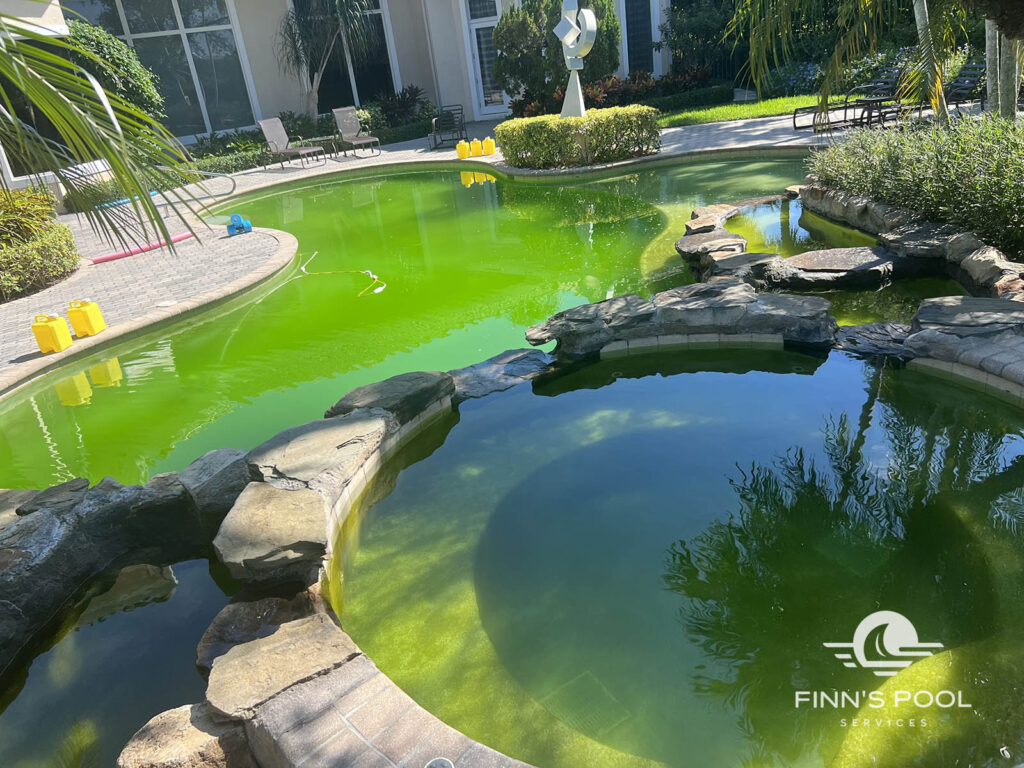
Troubleshooting Cloudy or Green Water
Water clarity issues are the most common reason homeowners start searching for a pool troubleshooting guide.
Cloudy or green water is rarely caused by just one thing.
Step 1: Test and Record Your Chemistry
Check:
-
Free chlorine
-
pH
-
Total alkalinity
-
Stabilizer (CYA)
For general safety guidance on chemical handling and water balance standards, the CDC provides additional resources for residential pool owners.
High chlorine does not always mean clean water. If pH is out of range or stabilizer levels are too high, chlorine becomes less effective.
Step 2: Inspect Filtration
If chemistry is balanced but water is still cloudy:
-
Check filter pressure
-
Backwash (if sand or DE)
-
Clean cartridges if applicable
-
Verify the pump is running long enough daily
Insufficient run time is a frequent oversight in Florida’s heat.
Step 3: Check for Phosphates or Organic Load
Heavy rain, fertilizer runoff, or debris accumulation can overwhelm chlorine. If algae returns quickly after treatment, additional testing may be required.
If water does not clear after proper balancing and filtration checks, expand your inspection to circulation patterns and system run time before assuming equipment failure.
If Algae Keeps Returning
If your pool clears up after shocking but turns green again within a few days, the problem is usually circulation or hidden buildup.
Algae commonly hides:
-
Behind pool light niches
-
Under ladder anchors
-
In low-flow corners
-
Inside skimmer throats
Brushing those areas manually and confirming proper return jet direction often resolves recurring blooms. In Florida’s heat, even small circulation dead spots can allow algae to reestablish quickly.
If repeated chemical treatments fail, the issue may not be chlorine strength but hydraulic performance.
Dealing with Low Suction or Weak Flow
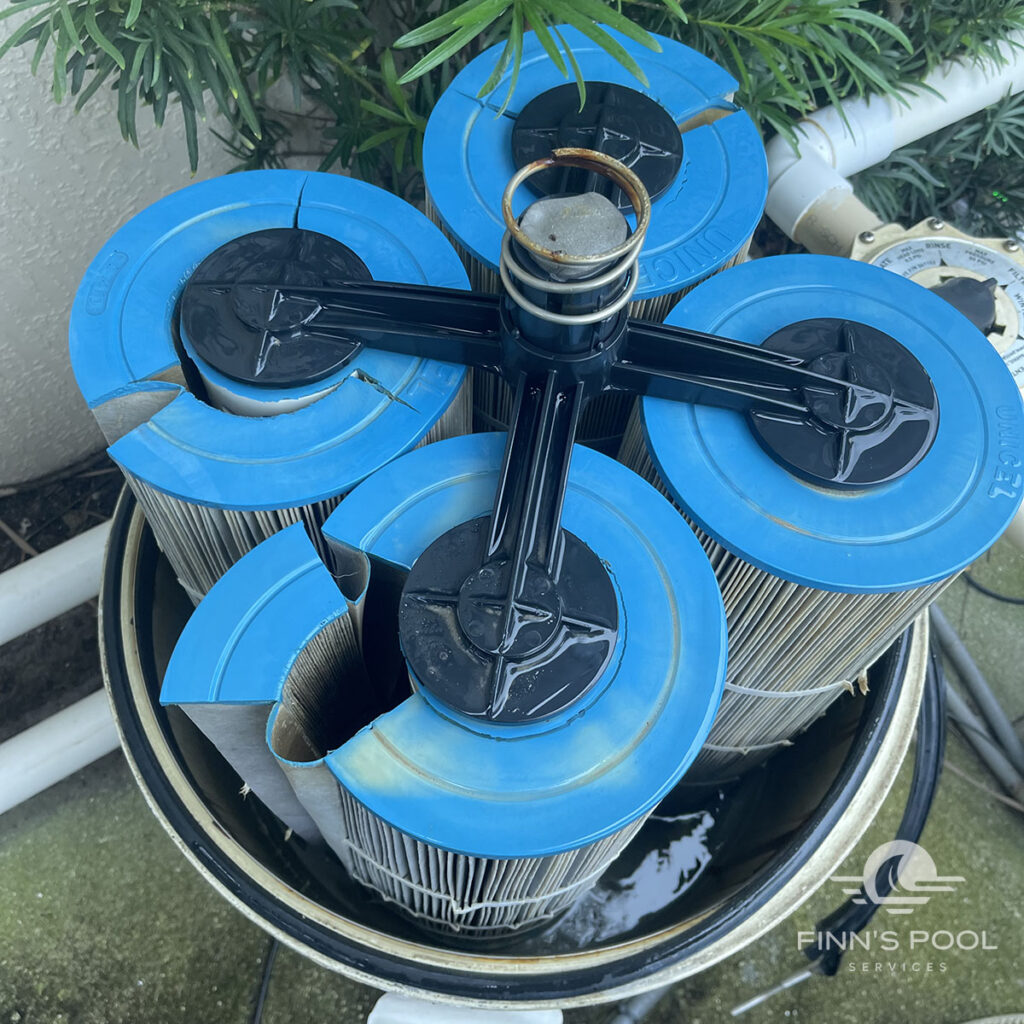
Weak circulation usually shows up gradually before it becomes a complete blockage.
Low suction is often noticed when:
-
The skimmer stops pulling debris
-
The pool vacuum barely moves
-
Return jets feel weak
Basic DIY Checks
1. Empty All Baskets
Check:
-
Skimmer baskets
-
Pump basket
Even partially clogged baskets restrict flow.
2. Inspect the Filter
Dirty filters dramatically reduce circulation.
High pressure on the gauge indicates restriction on the return side.
3. Look for Suction Leaks
Air bubbles in the pump basket or return lines often signal an air leak.
Check:
-
Pump lid seal
-
Suction valves
-
Visible fittings
Low suction combined with visible air usually requires closer inspection. Low suction is one of the most common mechanical issues covered in this pool troubleshooting guide because it often signals deeper hydraulic problems.
👉 More from Finn’s Pool Services’ Blog
You can learn more about the hidden costs of choosing the wrong pool maintenance partner in our detailed article about how pool maintenance affects home insurance prices in Florida.
Heater Not Reaching Temperature
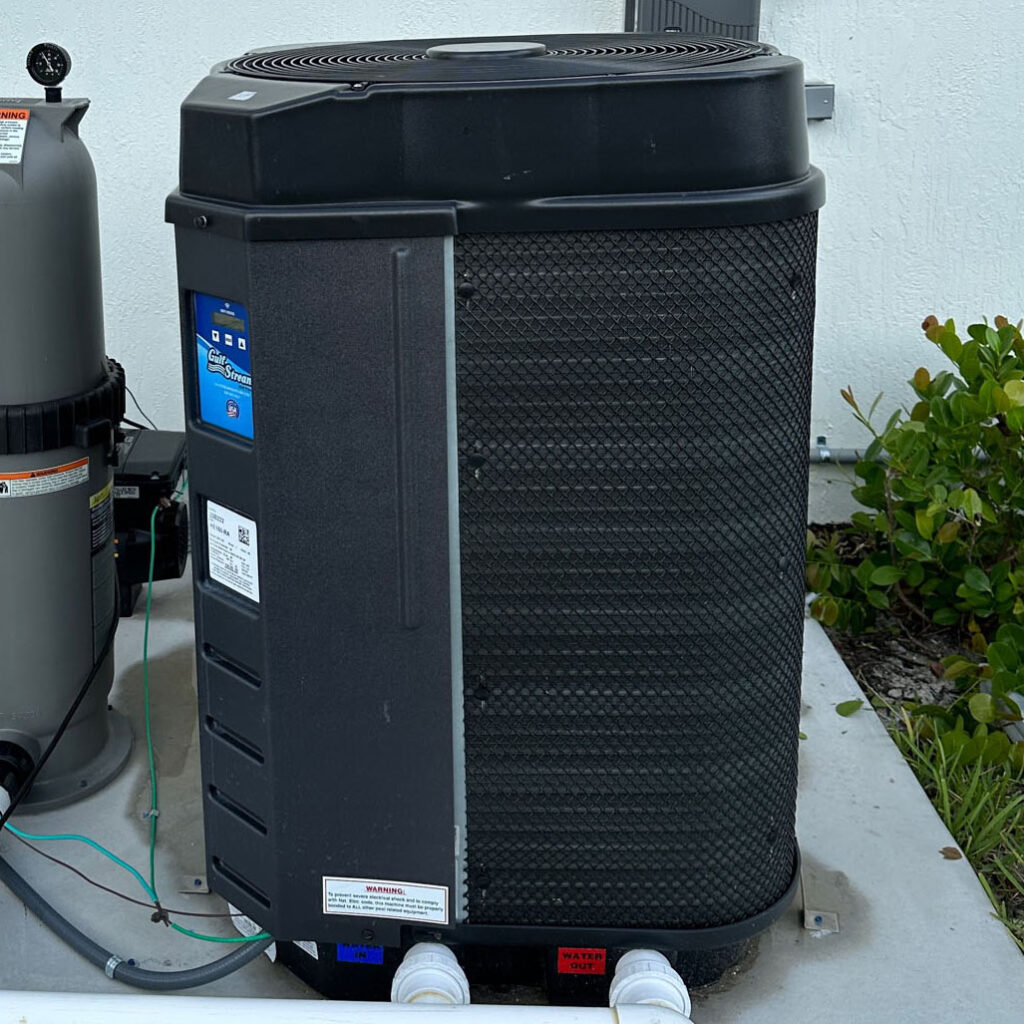
If your pool heater runs but does not reach the set temperature:
-
Confirm proper water flow (heaters shut down with low flow)
-
Clean filter if pressure is high
-
Check that valves are positioned correctly
-
Verify thermostat settings
In Jupiter and West Palm Beach, salt air and humidity can accelerate corrosion on heater components. If the heater cycles on and off repeatedly, professional diagnostics are recommended.
Troubleshooting Pool Light Problems
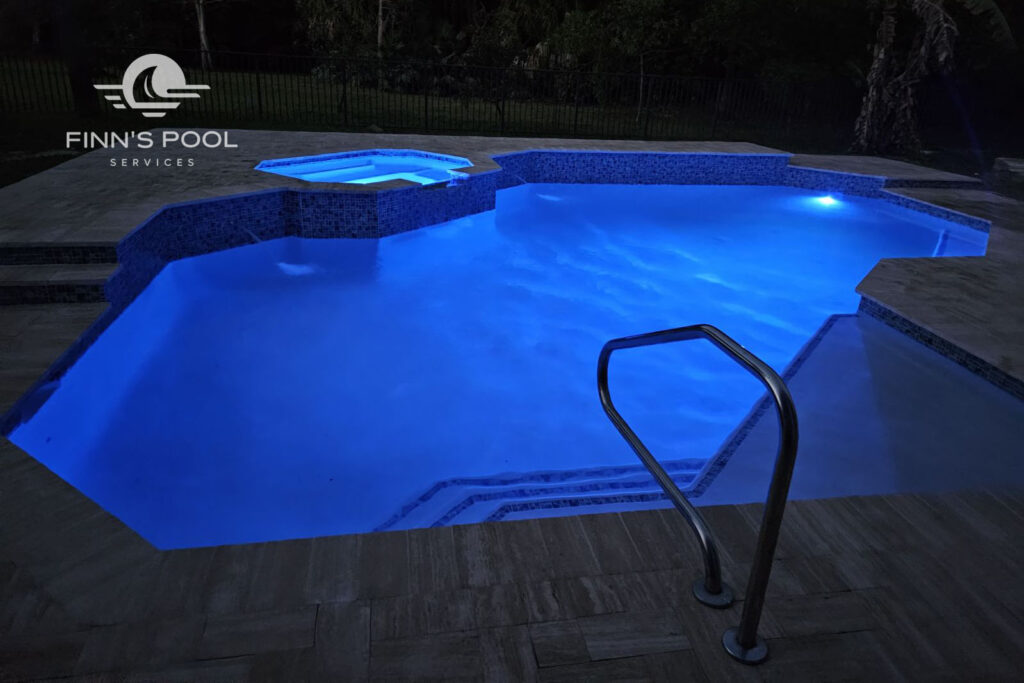
Pool lighting issues are common, especially in Florida where moisture, heat, and storms put extra stress on electrical components.
If your pool light flickers, turns off randomly, or stops working completely, start with the basics:
-
Check the breaker panel for a tripped breaker
-
Reset the GFCI outlet if your system has one
-
Confirm the timer or automation system is sending power
If power is reaching the fixture but the light still does not work, the issue may involve the bulb, transformer, wiring, or internal seal. Water intrusion inside a light fixture is a common failure point and should be addressed promptly.
Because pool lighting involves electrical components near water, this is not an area for trial-and-error repairs. If moisture, corrosion, or inconsistent power is suspected, a licensed technician should inspect the system.
When DIY Is Not Enough
A good pool troubleshooting guide helps you rule out the simple causes first.
However, some signs require licensed evaluation:
-
Persistent air in system
-
Electrical breaker trips
-
Burning smells from equipment
-
Visible leaks at the equipment pad
-
Rapid water loss
Continuing to operate failing equipment can turn a manageable repair into a major replacement.
If your troubleshooting efforts point to a mechanical or structural issue, you can learn more about professional solutions on our West Palm Beach Pool Repair page.
For general safety guidance, homeowners can also reference the Florida Department of Health’s pool safety standards, which outline recommended practices for pool equipment and barriers.
Final Thoughts
Most common pool issues start small. A slight noise. A subtle change in water clarity. A minor pressure shift.
Addressing these early prevents larger problems later.
This pool troubleshooting guide is meant to give homeowners clarity and confidence. Handle the basic maintenance checks. Monitor your system. And if something feels off beyond the simple fixes, get it evaluated before it becomes expensive.
Regular observation is one of the most underrated parts of pool ownership. The more familiar you are with your equipment’s normal performance, the easier it becomes to spot small changes before they turn into major repairs.
Photo Credit: Hero Image by Eric Prouzet