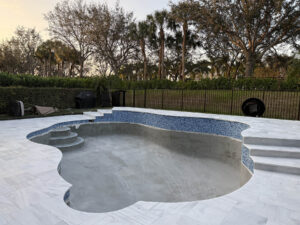
Choosing a daily swimming schedule impacts both your physical health and your pool’s maintenance requirements. While convenience plays a role, the best time to swim depends on your specific goals for exercise, recovery, and water conditions. In Florida, environmental factors like humidity, UV intensity, and water temperature significantly influence the swimming experience.
Identifying the best time to swim requires understanding how your body responds at different times of day and how your pool chemistry shifts throughout the 24-hour cycle.
Cardiovascular Benefits of Morning Swimming
Many athletes and fitness-focused homeowners consider early hours the ideal swimming window. Morning water temperatures are typically at their lowest point of the day. Cooler water helps prevent overheating during sustained cardiovascular activity. Swimming laps before 9 AM can increase metabolic rate and provide steady energy throughout the morning.
Early swims also eliminate distractions. Residential pool owners often find that mornings offer a quieter environment that supports focus and consistency. Establishing a swim routine before work or family obligations begin increases long-term adherence to exercise goals.
From a maintenance standpoint, morning conditions are generally the most chemically stable. Sanitizer levels recover overnight, and debris accumulation is minimal compared to late afternoon conditions.
Recovery and Relaxation During Evening Swims
For homeowners prioritizing stress reduction, late-day swimming is often the preferred swimming time. After a full day of activity, low-impact aquatic movement helps relax tight muscles and reduce cortisol levels. Water temperatures are typically warmer by early evening, which improves joint mobility and relieves physical tension.
Hydrotherapy near sunset can also support improved sleep patterns. Moving from warm pool water into cooler indoor air triggers a gradual drop in body temperature, which signals the body to prepare for rest. Many homeowners use evening swims as a structured decompression routine.
Evening use does require attention to sanitizer levels, especially during peak summer months when UV exposure has been intense throughout the day.
Thermal Dynamics and Water Temperature
Water temperature fluctuates based on thermal energy absorption. Throughout the day, South Florida sun exposure transfers heat into the pool surface. A morning swim provides a crisp, refreshing environment. By mid to late afternoon, water temperature reaches its daily peak. For many Florida homeowners, understanding these daily temperature shifts helps determine the best time to swim based on comfort and performance goals.
Heat pumps and automation systems allow homeowners to control these fluctuations. If your optimal swim schedule is early morning, running a heater overnight ensures consistent conditions. If you prefer late-day swimming, allowing natural solar heating reduces energy demand.
Understanding thermal behavior allows you to plan usage while keeping operating costs predictable.
👉 More from Finn’s Pool Services’ Blog
You can learn more about the hidden costs of choosing the wrong pool maintenance partner in our detailed article about how pool maintenance affects home insurance prices in Florida.
Solar Impacts on Pool Chemistry
From a technical standpoint, early hours are often the best time to swim due to sanitizer stability. Florida’s midday sun produces heavy UV exposure that rapidly depletes free chlorine. This UV burn-off reduces active sanitizer levels between late morning and late afternoon.
In South Florida, maintaining proper cyanuric acid levels helps protect chlorine from rapid UV degradation, especially during peak summer conditions. Stabilizer levels within the recommended range allow chlorine to remain effective longer despite high sunlight exposure. The CDC recommends maintaining proper disinfectant levels in residential pools to prevent recreational water illnesses.
By early evening, chlorine levels may test lower than optimal if the pool has not been recently serviced. Swimming in water with insufficient sanitizer increases exposure risk to bacteria and algae growth. Checking chemical balance before evening use is a responsible safety measure.
Routine professional service ensures sanitizer levels recover properly overnight, keeping the water ready for use the next day.
Visibility and Safety for Night Swimmers
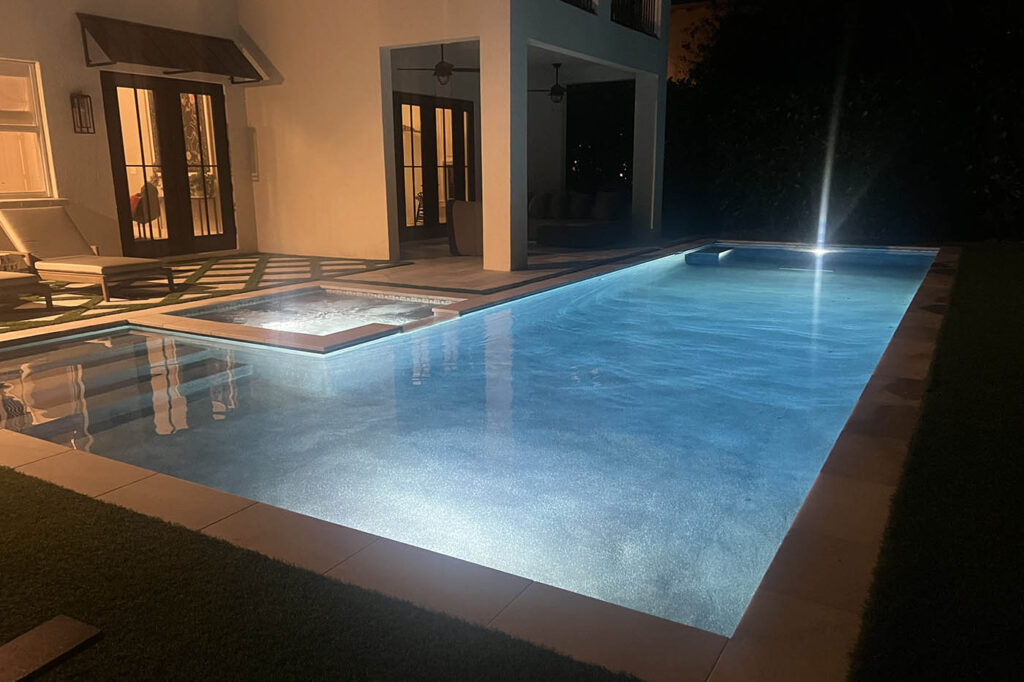
Modern LED systems provide even light coverage across the entire pool floor, reducing shadowed areas and improving visibility for swimmers. If evening becomes your preferred swimming time, proper lighting is essential. Clear visibility allows you to monitor the pool floor and ensure all swimmers remain visible at all times.
Older incandescent lighting systems often create uneven illumination. Dark areas can develop along steps or deep-end transitions. Upgrading to modern LED systems improves light distribution and enhances overall safety.
Many homeowners integrate lighting upgrades as part of broader equipment updates. Modern systems consume less energy and provide consistent brightness across the entire pool interior.
Maximizing Your Backyard Investment
Your swimming pool represents a significant lifestyle investment. Determining the best time to swim helps you align equipment performance and water balance with your personal routine.
Morning swimmers benefit from stable chemistry and cooler water for exercise. Evening swimmers enjoy warmer temperatures and recovery-focused use. In both cases, equipment calibration, heating systems, lighting, and consistent water chemistry management play a central role.
Professional maintenance and timely pool repair ensure your equipment operates efficiently and your water remains safe regardless of the time of day.
Conclusion
The best time to swim depends on your health goals, schedule, and how your pool is maintained. Morning swimming supports cardiovascular performance and chemical stability. Evening swimming promotes relaxation and warmer water conditions.
A properly serviced pool gives you flexibility. With stable sanitizer levels, calibrated heating systems, and reliable circulation, your pool stays prepared whenever you decide to use it.
Finn’s Pool Services helps Florida homeowners maintain optimal water balance, heating efficiency, and equipment performance so their pool is ready when they are.
Photo Credit: Hero Image by Eric Prouzet