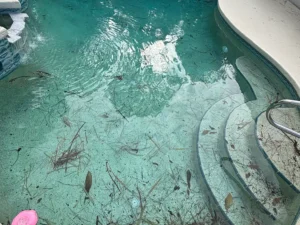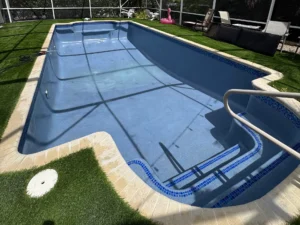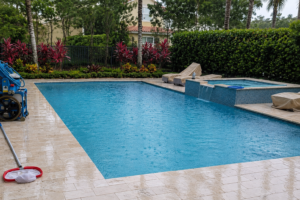
Phosphates are a common topic in pool care discussions, especially when pool owners are dealing with algae or recurring water quality issues. While phosphates in pool water are not harmful by themselves, elevated levels can make it harder to maintain clear, balanced water and can contribute to ongoing maintenance challenges if left unaddressed.
Phosphates in Pool Water and Why They Matter
Phosphates are a naturally occurring part of pool water chemistry, but problems can arise when phosphate levels build up over time. In higher concentrations, phosphates act as a nutrient source for algae, making algae growth more likely and more difficult to control.
Understanding how phosphates enter pool water, how they affect overall water quality, and when they actually need to be addressed helps pool owners make informed decisions. This approach can prevent unnecessary treatments while keeping pools running smoothly and efficiently.
What Are Phosphates in Pool Water?
Phosphates are compounds that contain phosphorus, a naturally occurring element found in many everyday materials. In pool water, phosphates usually enter from outside sources such as:
- Lawn fertilizers and landscaping runoff
- Leaves, pollen, and organic debris
- Dust and rainwater
- Swimmer waste, including sweat and body products
Because phosphates are present in the environment, most pools contain some level of phosphates at all times. The issue arises when those levels build up faster than the pool system can manage.
How Phosphates Contribute to Algae Growth
Phosphates act as a food source for algae. When phosphate levels are high and other conditions are right, algae can grow more easily, especially in warm, sunny environments like Florida.
According to industry guidance on pool water chemistry and algae control, excess nutrients like phosphates can make algae harder to manage when sanitation and circulation are not optimal.
It’s important to note that phosphates alone do not cause algae. Algae growth usually results from a combination of factors, including insufficient sanitizer levels, poor circulation, or inconsistent maintenance. However, higher phosphate levels can make algae harder to control once it appears.
Do Phosphates Reduce Chlorine Effectiveness?
Phosphates do not directly neutralize chlorine, but they can indirectly make chlorine work harder. When algae has a readily available nutrient source, it can grow faster, forcing chlorine to fight a constant uphill battle.
In pools with recurring algae problems, high phosphate levels may be one contributing factor among several others. Proper water balance, circulation, and filtration remain just as important as phosphate management.
When Should Phosphate Levels Be Tested?
Phosphate testing is not required during every routine water test, but it can be helpful in specific situations, such as:
- Recurring algae issues despite proper chlorine levels
- Pools located near heavy landscaping or fertilized areas
- After heavy rain or storm runoff
- When troubleshooting ongoing water clarity problems
Professional pool services often include phosphate testing as part of a broader water analysis when algae or water balance issues persist.
How High Is Too High for Phosphates?
There is no single “danger” level for phosphates, but most pool professionals consider phosphate levels below 200 parts per billion (ppb) to be manageable under normal conditions.
Higher levels do not automatically mean a problem exists. Many pools operate without issue at higher phosphate levels as long as sanitation, filtration, and circulation are properly maintained.
How Are Phosphates Removed from Pool Water?
When phosphate levels are contributing to ongoing algae or water quality problems, phosphate removers may be used. These products bind to phosphates in the water so they can be captured by the pool’s filtration system and removed.
Phosphate removers should be used carefully and according to product instructions. After treatment, filters often need to be cleaned to remove the captured residue.
It’s also important to address the source of phosphates, such as improving debris removal, managing runoff, and maintaining consistent pool care.
Are Phosphate Treatments Always Necessary?
Not always. Phosphate removal is best viewed as a supporting tool, not a primary solution. In many cases, improving regular maintenance, circulation, and chemical balance can resolve water quality issues without phosphate treatment.
A professional pool service can help determine whether phosphate removal is actually needed or if other adjustments would be more effective.
Why Professional Pool Maintenance Matters
Managing phosphates is just one part of maintaining healthy pool water. Consistent professional pool maintenance helps ensure:
- Proper chemical balance
- Efficient filtration and circulation
- Early detection of water quality issues
- Fewer algae outbreaks and chemical swings
When water chemistry is monitored regularly, phosphate levels rarely become a major concern.
Maintaining Clear, Balanced Pool Water
Phosphates are a normal part of pool water chemistry, but elevated levels can contribute to algae growth and make maintenance more difficult. Understanding their role allows pool owners to make informed decisions without overcorrecting or relying on unnecessary treatments.
With proper testing, consistent maintenance, and professional guidance when needed, phosphate levels can be managed effectively as part of an overall pool care strategy. Recurring water balance problems are often a sign of broader maintenance issues, which we break down in our guide on common pool issues and how to fix them.
If you’re experiencing ongoing water quality issues or recurring algae, working with a trusted pool professional can help identify the underlying cause and keep your pool clean, balanced, and enjoyable year-round.
Updated: January 2026
- Phone: (561) 566-9344
- Email: [email protected]
-
Address: 1335 Old Okeechobee Rd. #450
West Palm Beach, FL 33401 - Mon – Fri: 8:00 AM – 6:00 PM
- Sat & Sun: 9:30 AM – 4:00 PM